Moving to Aurora puts you at the point along the Yonge Street corridor where the GTA's suburban sprawl thins out and a genuinely small town takes over, one with a preserved nineteenth-century Main Street, a GO station on the Barrie line, and a wave of newer subdivisions absorbing families who want more house for their money without giving up a commute into Toronto. At roughly 62,000 residents, Aurora sits north of Richmond Hill and just south of Newmarket, and it draws a specific kind of buyer: the family that has already priced out Richmond Hill or Vaughan and is chasing a bigger lot, a quieter street, or a heritage character home instead. Fast Track Move has been running CVOR-certified crews across York Region since 2016, and this guide covers what actually changes when you move to Aurora, from the heritage downtown core to the newer streets filling in near Bayview Avenue, plus what the move itself realistically costs from our North York depot.
Key Takeaways
- ✓Aurora's historic downtown sits at Yonge and Wellington, inside the Northeast Old Aurora Heritage Conservation District, designated in 2006 and recognized with the Prince of Wales Prize for Municipal Heritage Leadership in 2008
- ✓Newer executive subdivisions in Aurora Highlands, Bayview Northeast, and Aurora Grove draw Toronto and Richmond Hill families upsizing into larger, newer-build homes
- ✓Aurora GO sits on the Barrie line, and on weekends it's effectively the end of the line, most trains terminate at Aurora rather than continuing north, which means better weekend frequency than towns further up the corridor
- ✓The drive from our North York depot is meaningfully shorter than the roughly 50 km commonly quoted from downtown Toronto, and it lands inside our 25-50 km local truck and travel fee band ($249 flat)
- ✓Every job carries a 3-hour minimum, and older Yonge Street corridor homes often need extra care for narrow doorways, original hardwood, and steep staircases
- ✓Book 3-4 weeks ahead for a peak-season (May-October) weekend move; off-peak (November-April) rates run lower per crew size
Why Families Choose Aurora Over Richmond Hill or Newmarket
Aurora occupies a specific niche in the York Region housing market. It's smaller than Richmond Hill, which has grown past 200,000 residents, and smaller than Newmarket's 88,000-plus, which gives it a slower, more small-town feel even though it sits inside the same commuter belt. Families who have already been priced out of a detached home in Richmond Hill or Vaughan often find that the same budget goes further in Aurora, particularly in the newer subdivisions on the town's east and west sides. The trade-off is a few extra minutes of driving or a slightly longer GO ride, and for a lot of our clients, that trade is an easy one to make once they see the lot sizes.
We see the pattern most often with two kinds of moves: a Toronto or Richmond Hill family upgrading into a larger Aurora detached home, and a downsizing household moving from a larger property into one of the town's condo or townhouse developments near the Yonge corridor. Both groups tend to be moving up in square footage or amenities relative to where they came from, even when the destination itself is smaller than the town they're leaving.
Aurora's Historic Yonge Street Core
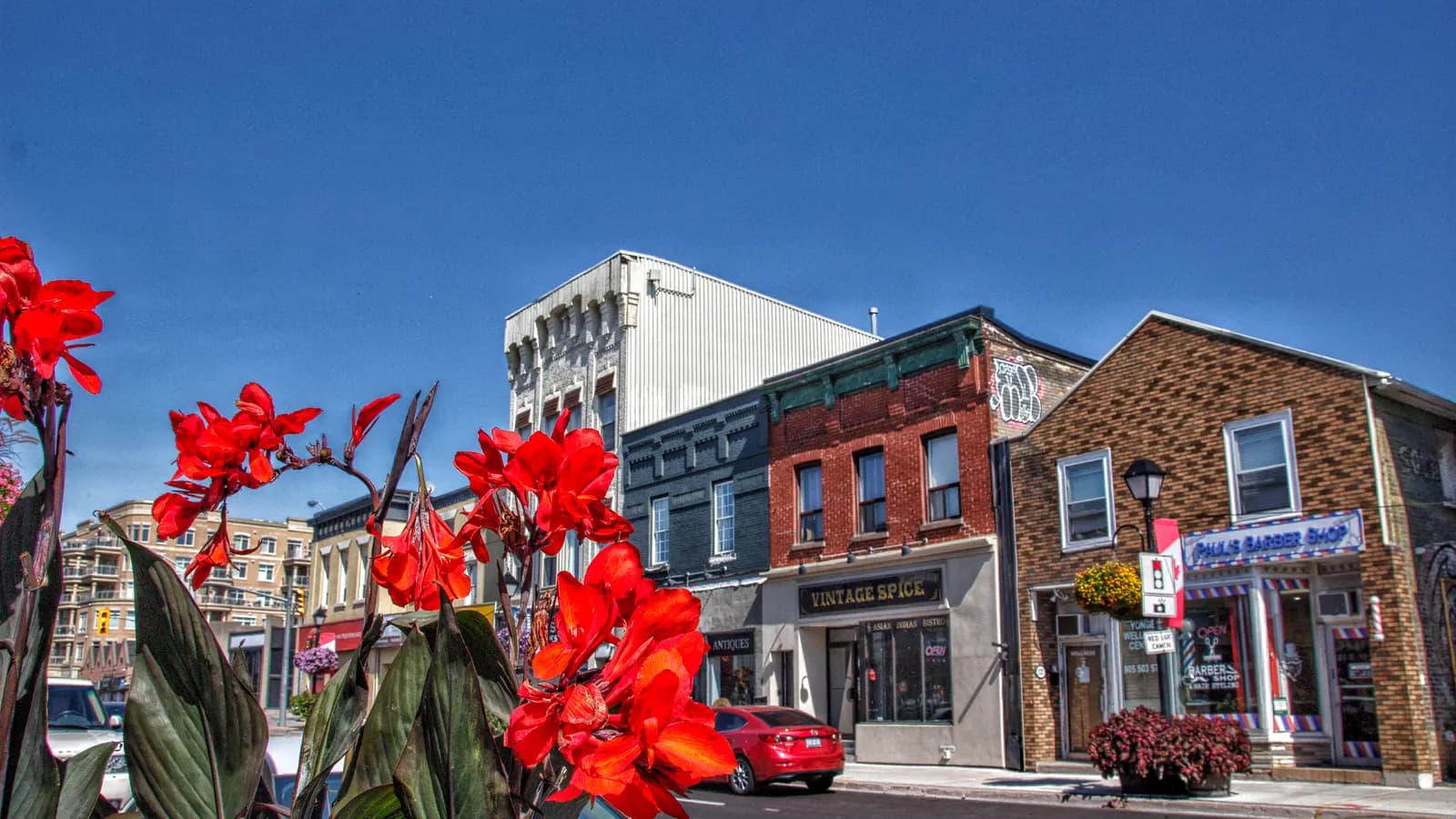
For most of its history, Aurora grew up around the intersection of Yonge and Wellington Streets, and that historic core is still the town's identity today. The Northeast Old Aurora Heritage Conservation District, designated in 2006, protects a concentrated stretch of late-nineteenth and early-twentieth century buildings in a mix of Victorian Gothic Revival, Edwardian, Second Empire, and Italianate styles, and the town won the Prince of Wales Prize for Municipal Heritage Leadership in 2008 for the work that went into preserving it. Walk Yonge Street through downtown Aurora today and the storefronts are still doing double duty as a working commercial strip: independent shops, cafes, and service businesses occupying buildings that have stood for well over a century.
Two landmarks anchor the heritage district. Hillary House, an 1862 Gothic Revival home on Yonge Street that served as a doctor's residence and practice for generations, is now a National Historic Site and museum. A few blocks away, the old Church Street School has been converted into the Aurora Cultural Centre, housing the town's museum, archives, and gallery space. Moving into or out of a home in this part of Aurora means dealing with the realities of century-old construction: narrow original doorways, hardwood that deserves floor runners rather than bare cardboard, and staircases that were built for a different era's furniture. Our crews plan for that in advance rather than discovering it on move day.
Planning a Move?
Get a free, no-obligation quote in under 2 minutes.
New Subdivisions Filling In Around the Core
The other side of Aurora's story is newer construction, and it's where most of our Aurora moves actually happen. Aurora Highlands and Bayview Northeast, on the town's east side near Bayview Avenue, are built out with executive-style detached homes on larger lots, the kind of three-car-garage, finished-basement properties that draw families trading up from a Toronto semi or a Richmond Hill townhouse. Aurora Grove and the streets around Fleury Park and St. Andrews mix mid-century homes with mature trees and infill construction, giving buyers a middle option between heritage character and brand-new build.
These newer neighbourhoods come with their own moving considerations. Larger homes mean more furniture, more boxes, and realistically a bigger crew: a typical 3-4 bedroom detached move needs a 4-mover crew and runs 7 to 9 hours on site, versus the 5 to 7 hours a 2-3 bedroom home usually takes with 3 movers. Home gyms, hot tubs, and finished basements with pool tables or home theatre setups show up often enough on these jobs that our specialty moving service handles a meaningful share of them.
Getting Around Aurora: Highway 404 and the GO Train
Aurora's road network is built around Highway 404, which runs the length of the town with interchanges at Wellington Street and Bloomington Road, giving quick access south to Highway 401 and north toward Newmarket and Barrie. Wellington Street and St. John's Sideroad are the town's main east-west arteries, with St. John's Sideroad marking Aurora's northern edge.
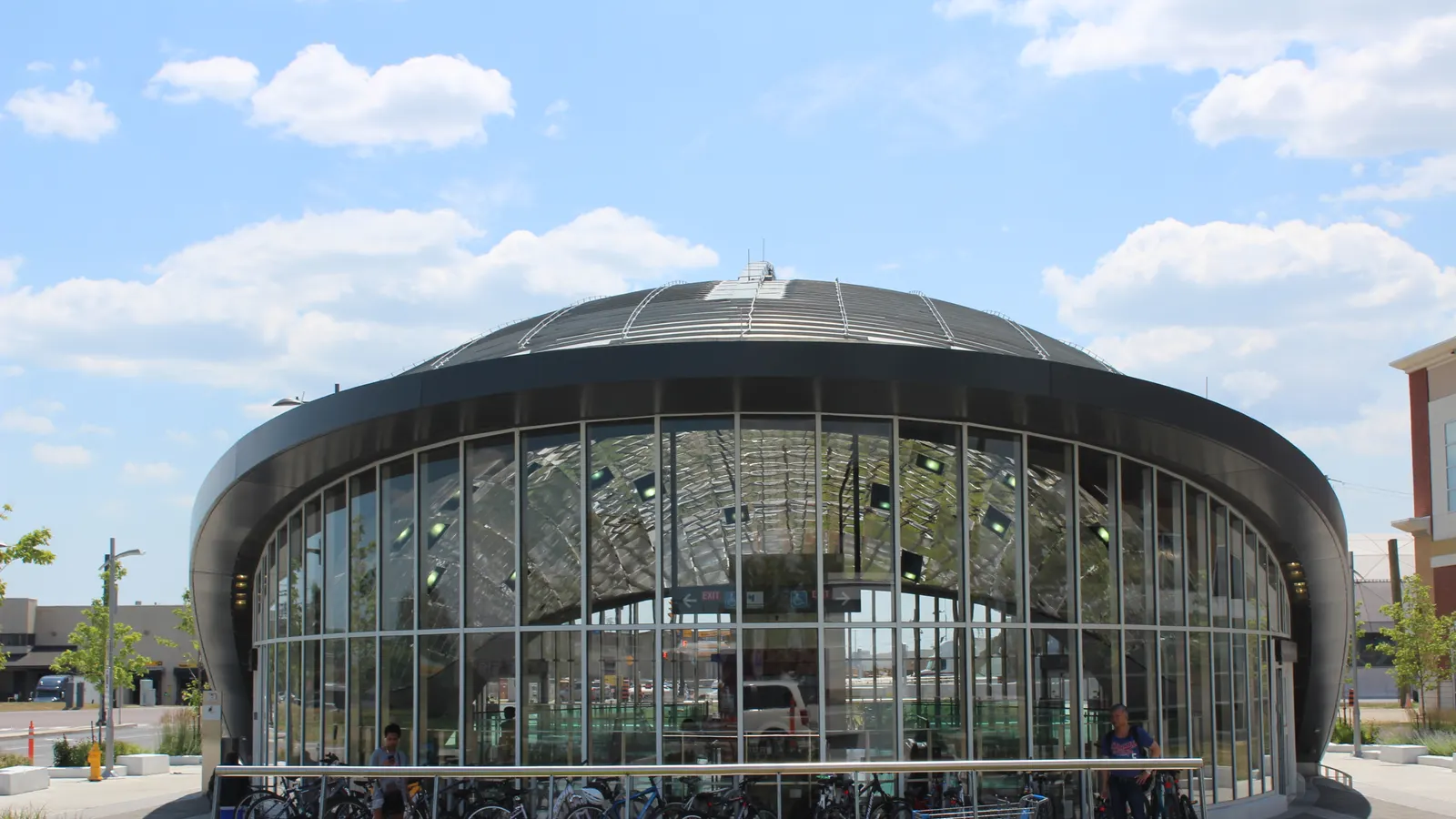
For commuters, Aurora GO station sits on the Barrie line, with weekday service running roughly every 15 to 30 minutes during peak periods and a typical express-pattern weekday train reaching Union Station in a little under an hour. The detail that surprises a lot of people moving up from Richmond Hill or Toronto: on weekends, Aurora is effectively the end of the line for GO service. Most Saturday and Sunday trains terminate at Aurora rather than continuing north to Newmarket and Barrie, which means weekend frequency here is noticeably better than in towns further up the corridor. For a family weighing Aurora against Newmarket on commute convenience alone, that's a real point in Aurora's favour.
How Far Is Aurora From Our North York Depot?
Aurora is commonly described as sitting about 50 km north of downtown Toronto via Highway 404, and that figure holds up if you're measuring from the downtown core. Our depot, though, is in North York near Bayview Avenue and Sheppard Avenue, already well up the same Yonge/404 corridor that runs to Aurora. From there, the drive is meaningfully shorter, roughly 30 to 35 km depending on which part of town you're headed to, and it takes about 30 to 40 minutes via Highway 404 outside of rush hour.
That distance lands comfortably inside our 25-50 km local truck and travel fee band, the same band that covers Richmond Hill, which means Aurora jobs carry a flat $249 truck and travel fee regardless of home size, on top of hourly crew labour and 13% HST. It's not a borderline call. Even allowing for a wide margin of error in the estimate, an Aurora move from our depot sits well inside that 25-50 km tier rather than pushing toward the 50-80 km band or requiring a custom long-distance quote.
What an Aurora Move Actually Costs
Here's a real worked example for a family moving from a Richmond Hill or midtown Toronto townhouse into a 2-3 bedroom Aurora home, the kind of move we see constantly along this corridor. A job like this typically needs a 3-mover crew and runs about 6 hours on site. During peak season (May through October), a 3-mover crew bills at $259 per hour:
6 hours x $259/hour = $1,554 in labour + $249 local truck and travel fee = $1,803 subtotal + 13% HST ($234.39) = $2,037.39 total
Book the same move during off-peak season (November through April), when the 3-mover rate drops to $219 per hour, and the total comes down to roughly $1,766.19, about $271 less for an identical job. Any time beyond a job's stated minimum is billed in 15-minute increments rather than rounded up to the next full hour, so the final invoice tracks closely with the original estimate.
Larger and smaller moves scale the same way. Here's how crew size, hours, and the flat $249 truck fee combine across the range of homes we move into Aurora:
| Move type | Crew | Typical hours | Peak-season subtotal before HST* |
|---|---|---|---|
| Condo/townhouse, Yonge corridor | 2 movers | 3-4 hrs (3-hr minimum) | $846-$1,045 |
| 2-3 bedroom home, Fleury Park/St. Andrews | 3 movers | 5-7 hrs | $1,544-$2,062 |
| 3-4 bedroom detached, Aurora Highlands/Bayview Northeast | 4 movers | 7-9 hrs | $2,482-$3,120 |
| 4+ bedroom executive home | 5 movers | 9-12 hrs | $3,840-$5,037 |
*Includes the flat $249 local truck and travel fee from our North York depot. HST (13%) is always a separate line, never folded into the hourly rate. Off-peak (November-April) hourly rates run $20-$40 lower per crew size than the peak figures above, and every job is subject to a 3-hour minimum.
Heritage Home vs New-Build: What Actually Changes
A move into a Yonge Street heritage home and a move into an Aurora Highlands new-build both count as "moving to Aurora," but the crews plan them differently. In the heritage core, the concern is protecting what's original: hardwood floors that have never seen a moving dolly, plaster walls that don't tolerate a bumped corner the way drywall does, and doorway and staircase dimensions that were never built with a modern sectional sofa in mind. Our crews bring floor runners and extra wrapping as standard on these jobs rather than treating them as an add-on.
In the newer subdivisions, the challenge is usually volume rather than fragility. A 3,000-square-foot home with a finished basement and a three-car garage holds a lot more than its curb appeal suggests, and families who have lived in the same house for a decade routinely underestimate how much has accumulated in the basement and garage alone. Sizing the crew correctly up front, based on an honest inventory rather than a guess, is what keeps these jobs on schedule.
Common Mistakes to Avoid
The most common mistake we see on Aurora moves is booking too late for a summer weekend. Peak season runs May through October across the GTA, and Aurora sees the same seasonal crunch as Richmond Hill and Newmarket, driven by families timing their move around the school calendar. Calling as soon as you have a firm closing date protects your preferred weekend.
The second is underestimating a heritage home because of its modest street-facing footprint. Century homes in the Yonge Street core often have additions, finished third floors, or converted attic space that adds real time to a load, and a crew sized for the visible square footage alone will run past the estimate. The third is not confirming Highway 404 conditions before picking a start time; a trip that takes 30 minutes at 10 a.m. can take considerably longer during the afternoon rush, which matters when a crew has a second job booked the same day.
Planning Your Move to Aurora
Whether you're headed into a Yonge Street heritage home, a new build in Aurora Highlands, or a townhouse near the GO station, the planning basics are the same: lock in your date early, flag any heritage-home concerns when you book so the right equipment shows up on the truck, and give yourself a buffer for Highway 404 traffic. If you're changing addresses, Canada Post's mail forwarding service is worth setting up a couple of weeks ahead of your move date.
Fast Track Move has been running CVOR-certified crews across York Region since 2016, backed by 955+ five-star Google reviews, and Aurora, from the heritage storefronts on Yonge Street to the newest streets in Bayview Northeast, is part of our regular coverage area every month. If you're planning a move to Aurora, our Aurora movers page has more on our local service, or call us at 647-931-2328 for a free, no-obligation quote. We'll walk through exactly what your home needs, whether that's extra floor protection for original hardwood or a crew sized for a finished basement full of a decade's worth of belongings.