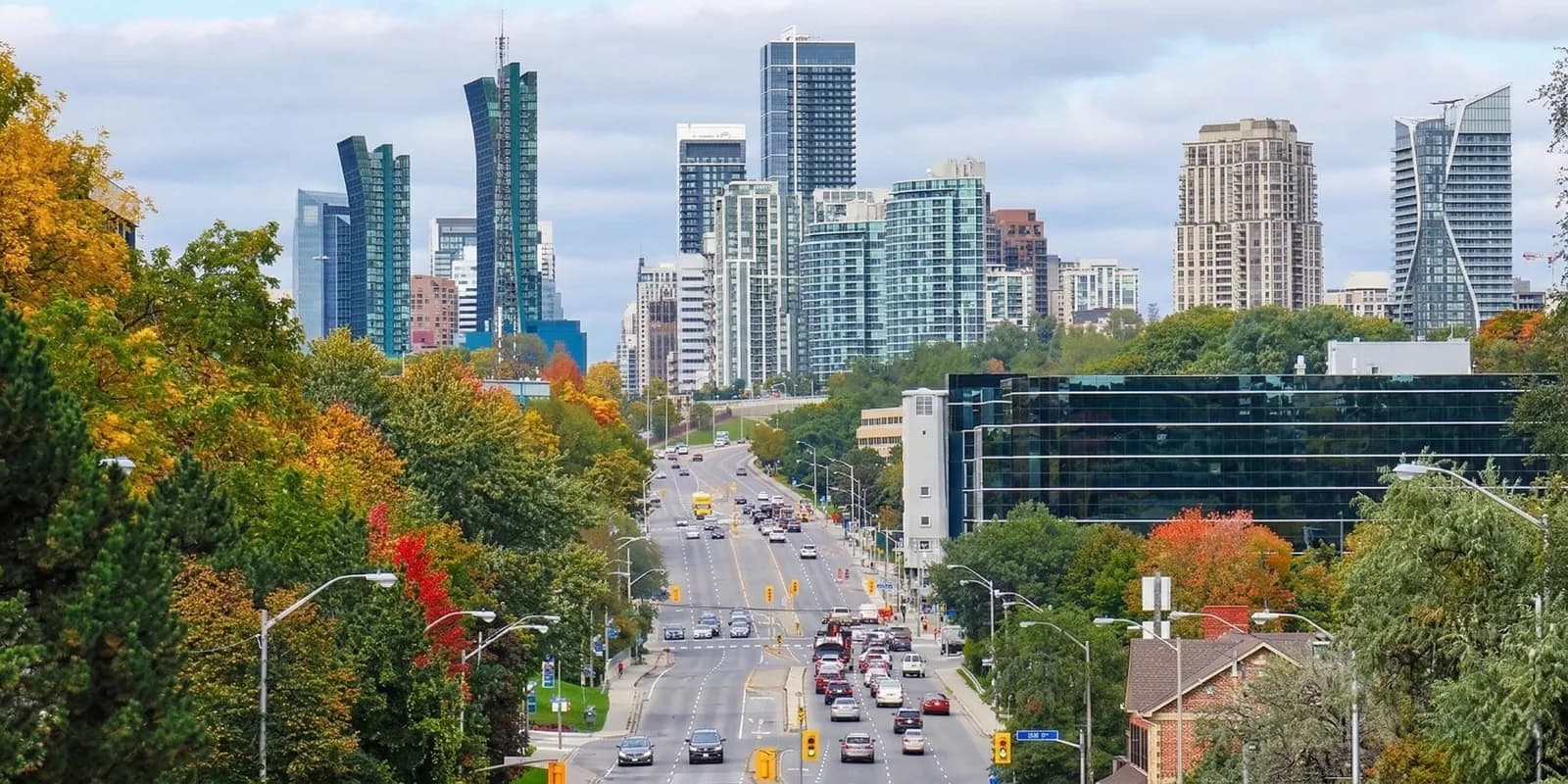
Moving to Richmond Hill puts you at the northern edge of the GTA's most established family corridor, where nineteenth-century storefronts along Yonge Street give way to executive homes on the Oak Ridges Moraine and new condo towers keep rising along the same street that has anchored this community for two centuries. At roughly 200,000 residents and a 28-kilometre drive north of our North York depot, Richmond Hill is one of the busiest destinations our crews see every summer, especially among Toronto families upsizing into a detached home before the school year starts. Fast Track Move has been running crews across York Region since 2016, and this guide walks through what actually changes neighbourhood by neighbourhood, what a Richmond Hill move costs this peak season, and why summer books up faster here than in almost any other area we serve.
Key Takeaways
- ✓Richmond Hill spans the Yonge Street corridor's family neighbourhoods and the estate properties of Oak Ridges, perched on the Oak Ridges Moraine
- ✓Lake Wilcox Park and the David Dunlap Observatory trails make Oak Ridges one of the GTA's most active summer neighbourhoods
- ✓Highway 404, Highway 407 ETR, and the Richmond Hill GO line put the rest of the GTA within easy reach of every neighbourhood
- ✓May through October is Fast Track Move's peak season and Richmond Hill's busiest moving window, driven by school-year timing and detached-home upsizing from Toronto
- ✓A local move to Richmond Hill falls in our 25-50 km truck fee band from the North York depot: a flat $249, on top of hourly crew labour and 13% HST
- ✓Book 3-4 weeks ahead for a summer weekend date; off-peak (November-April) rates and availability are both better if your timeline is flexible
Why Families Move to Richmond Hill
Richmond Hill has spent the last two decades absorbing a steady wave of Toronto families chasing more square footage without leaving the GTA entirely. The pull is straightforward: a detached home on a quiet Bayview Hill or Jefferson street typically buys more space than the equivalent semi in midtown Toronto, the commute back into the city is manageable via Highway 404, Highway 407 ETR, or the Richmond Hill GO line, and the town sits within the York Region District School Board, one of the largest school boards in Ontario. That school-board reality is a real factor in when people call us. We see the same pattern every summer: a family outgrows a two-bedroom condo near the Yonge Street subway extension, spends the spring house-hunting in Richmond Hill, and books their move for late July or August so the kids start September at their new school rather than switching partway through the year.
The historic Yonge Street corridor is still the town's spine. Downtown Richmond Hill, centred on the heritage village near Yonge and Major Mackenzie, mixes independent shops and older residential streets with a wave of new condominium and townhouse developments that keep landing along the corridor. Families who want walkability without giving up a detached-home budget tend to land a few blocks east or west of Yonge, while condo buyers cluster directly on the corridor itself, close to Hillcrest Mall and the Viva bus rapid transit line that runs the length of Yonge Street.
Richmond Hill Neighbourhoods at a Glance
Richmond Hill is large enough that "moving to Richmond Hill" means genuinely different things depending on where you land. Oak Ridges, in the north end atop the Oak Ridges Moraine, holds some of York Region's most desirable estate properties: large homes on multi-acre lots backing onto conservation land and kettle lakes, many with long gravel driveways that call for careful truck positioning. Jefferson, just south of Oak Ridges, is newer family subdivision territory, built out over the last fifteen years with detached homes and townhouses aimed squarely at growing households.
Bayview Hill sits east of Bayview Avenue and has become a magnet for families upgrading into larger homes, thanks to nearby schools and quick access to Highway 404 and Highway 407 ETR. Mill Pond, closer to downtown, centres on a genuinely pretty park and pond with a heritage bridge, mature trees, and a strong walkable core. Along Yonge Street itself, a growing corridor of mid-rise and high-rise condo buildings gives renters and downsizers a foothold in the same town without the estate-home price tag. Each of these pockets calls for a slightly different moving plan, from freight-elevator coordination on the Yonge corridor to floor protection and long-carry planning in Oak Ridges.
Planning a Move?
Get a free, no-obligation quote in under 2 minutes.
Oak Ridges and Lake Wilcox in Summer
The Oak Ridges Moraine is the reason Richmond Hill feels less like a typical GTA suburb and more like a town built around its landscape. This ridge of sand and gravel deposits left behind by the last ice age runs across the top of the GTA, and Richmond Hill's northern neighbourhoods sit right on top of it, which is why Oak Ridges has kettle lakes, forested ravines, and rolling terrain that most nearby municipalities simply don't have.
Lake Wilcox, the small kettle lake at the centre of the neighbourhood, anchors Lake Wilcox Park, a waterfront park with a boardwalk promenade, a large splash pad, beach volleyball courts, a playground, and a sandy shoreline area that gets heavy use on summer weekends (swimming in the lake itself is not permitted, since the water isn't supervised). A few kilometres away, the David Dunlap Observatory Park offers close to four kilometres of easy, mostly open trails around a heritage-designated 1935 observatory, with leashed dogs welcome and self-guided tours of the grounds available through the growing season.
For anyone moving into an Oak Ridges estate home, this landscape shapes the move itself. Large lots, finished basements, home gyms, and the occasional hot tub or above-ground pool are common, and gravel or sloped driveways mean our crews plan truck positioning before anything comes off the truck. It also means a summer move here often gets timed around the neighbourhood's own calendar: families want to be unpacked before the splash pad and trail season is in full swing, not partway through it.
Getting Around Richmond Hill
Richmond Hill's road and transit network is one of the reasons it keeps attracting Toronto families who still need a reasonable commute. Highway 404 runs north-south through the town and connects directly into Highway 401, while Highway 407 ETR crosses the southern part of Richmond Hill east-west, giving quick toll-highway access to Vaughan, Markham, and Mississauga without touching downtown traffic. For anyone commuting into the city without a car, GO Transit's Richmond Hill line runs into Union Station, and York Region Transit's Viva bus rapid transit service runs the length of Yonge Street, connecting the corridor's condo buildings to the rest of the region.
That same network shapes moving-day logistics. A move that looks like a short hop on a map can take longer than expected if it crosses Highway 404 or 407 during rush hour, and our dispatch always builds a realistic drive-time buffer from the North York depot rather than relying on off-peak travel times.
Why Summer Is Richmond Hill's Busiest Season
May through October is Fast Track Move's peak season across the GTA, and Richmond Hill is one of the clearest examples of why. Families here are unusually likely to time a move around the school calendar rather than a lease date, which means demand clusters hard in July and August as households try to be fully settled before the first week of September. Add in the number of Toronto families using summer to upsize into a Richmond Hill detached home, plus the general GTA-wide jump in moving volume once the weather turns warm, and Richmond Hill weekends from mid-June through August fill up weeks in advance.
The practical takeaway is the same one we give every Richmond Hill client: book three to four weeks ahead for any summer weekend, and five to six weeks ahead if you're targeting the last two weeks of August. Mid-week dates (Tuesday through Thursday) are consistently easier to book than Saturdays, and they come with less competition for the loading zones and street parking that some Yonge corridor buildings require. If your timeline has any flexibility at all, an off-peak move between November and April comes with both better crew availability and lower hourly rates, which matters most on larger Oak Ridges and Bayview Hill homes where the labour hours add up.
What a Richmond Hill Move Actually Costs
Richmond Hill sits in our 25-50 km local truck and travel fee band, measured one-way from our North York depot, which works out to a flat $249 truck fee regardless of home size. On top of that, you pay for crew and hours, with every job subject to a 3-hour minimum.
Here's a real worked example for a family upsizing from a Toronto condo into a typical 3-4 bedroom detached home in Richmond Hill this summer. A home this size realistically needs a 4-mover crew and runs about 8 hours on site. During peak season (May-October), a 4-mover crew bills at $319 per hour:
8 hours x $319/hour = $2,552 in labour + $249 local truck and travel fee = $2,801 subtotal + 13% HST ($364.13) = $3,165.13 total
Book the same move during off-peak season (November-April), when the 4-mover rate drops to $279 per hour, and the math changes: 8 x $279 = $2,232 in labour, plus the same $249 truck fee, for a $2,481 subtotal, plus HST of $322.53, for a total of $2,803.53 — roughly $360 less than the peak-season price for an identical job. Any time beyond a job's minimum hours is billed in 15-minute increments, not rounded up to the next full hour, so the final number tends to track closely with the estimate.
Smaller moves scale down the same way. Here's how crew size, hours, and the flat $249 truck fee combine across the range of homes we move into Richmond Hill:
| Move type | Crew | Typical hours | Peak-season subtotal before HST* |
|---|---|---|---|
| Studio/1-bedroom condo, Yonge corridor | 2 movers | 3-4 hrs (3-hr minimum) | $846-$1,045 |
| 2-3 bedroom home, Mill Pond/Bayview Hill | 3 movers | 5-7 hrs | $1,544-$2,062 |
| 3-4 bedroom detached, Jefferson/Oak Ridges | 4 movers | 7-9 hrs | $2,482-$3,120 |
| 4+ bedroom estate home, Oak Ridges Moraine | 5 movers | 9-12 hrs | $3,840-$5,037 |
*Includes the flat $249 local truck and travel fee from our North York depot. HST (13%) is always added as a separate line, never folded into the hourly rate. Off-peak (November-April) hourly rates run $20-$40 lower per crew size than the peak figures above.
Condo Corridor vs Estate Home: What Changes
A Yonge corridor condo move and an Oak Ridges estate move are both "moving to Richmond Hill," but the logistics barely overlap. Condo buildings along Yonge Street increasingly require the same paperwork as downtown Toronto towers: a certificate of insurance for property management, a booked freight elevator window, and a confirmed loading dock or visitor parking slot, usually arranged two to four weeks ahead (longer during peak season). The job itself tends to move fast once the elevator window opens, because units are smaller and hallway distances are short.
An Oak Ridges or Bayview Hill estate move runs on different rules entirely. There's no elevator to book, but there is more square footage, more furniture, and often a long gravel or sloped driveway that needs planning before the truck arrives. Finished basements, home gyms, and hot tub or pool-table disassembly show up often enough that our specialty moving service handles a meaningful share of Oak Ridges jobs. Floor protection matters here too, particularly in older homes near Mill Pond with original hardwood that deserves runners rather than just cardboard.
Common Mistakes to Avoid
A few mistakes come up repeatedly on Richmond Hill moves, regardless of neighbourhood. The most common is waiting too long to book a summer Saturday — by the time some families finish house-hunting and close on a Richmond Hill home, the popular August dates are already gone. Calling as soon as you have a firm closing date, even before every detail of the move is settled, protects your preferred window.
The second is underestimating an Oak Ridges or Bayview Hill home because it looks manageable from the street. A four-bedroom estate home with a finished basement, garage storage, and years of accumulated belongings routinely takes longer to load than its square footage suggests, and a crew sized for a smaller job will run past the estimate. The third is ignoring Highway 404 and 407 ETR rush-hour timing when picking a start time — a drive that takes twenty minutes at 10 AM can take twice that at 4:30 PM, and that difference matters when a crew is trying to make a second job the same day.
Planning Your Richmond Hill Move
Wherever you're landing in Richmond Hill, from a Yonge corridor condo to an Oak Ridges estate home, the planning basics stay the same: lock in your date as early as you can, confirm any building requirements right away if you're headed into a condo, and give yourself a buffer for Highway 404 or 407 traffic on move day. If you're changing addresses, Canada Post's mail forwarding service is worth setting up a couple of weeks ahead so nothing gets lost in the shuffle.
Fast Track Move has been running CVOR-certified crews across the GTA since 2016, with 955+ five-star Google reviews behind that track record, and Richmond Hill — from the Yonge Street corridor to the Oak Ridges Moraine — is one of the areas we handle every month, all summer long. We carry the insurance condo buildings ask for, we know how to plan a truck around a gravel Oak Ridges driveway, and our crews treat a Mill Pond heritage home with the same care as a brand-new Yonge Street tower. If you're planning a move to Richmond Hill, our Richmond Hill movers page has more detail on our local service, or call us at 647-931-2328 for a free, no-obligation quote. We'll help you figure out exactly what your move needs, whether that's a freight elevator booking or an extra set of floor runners for a gravel driveway.