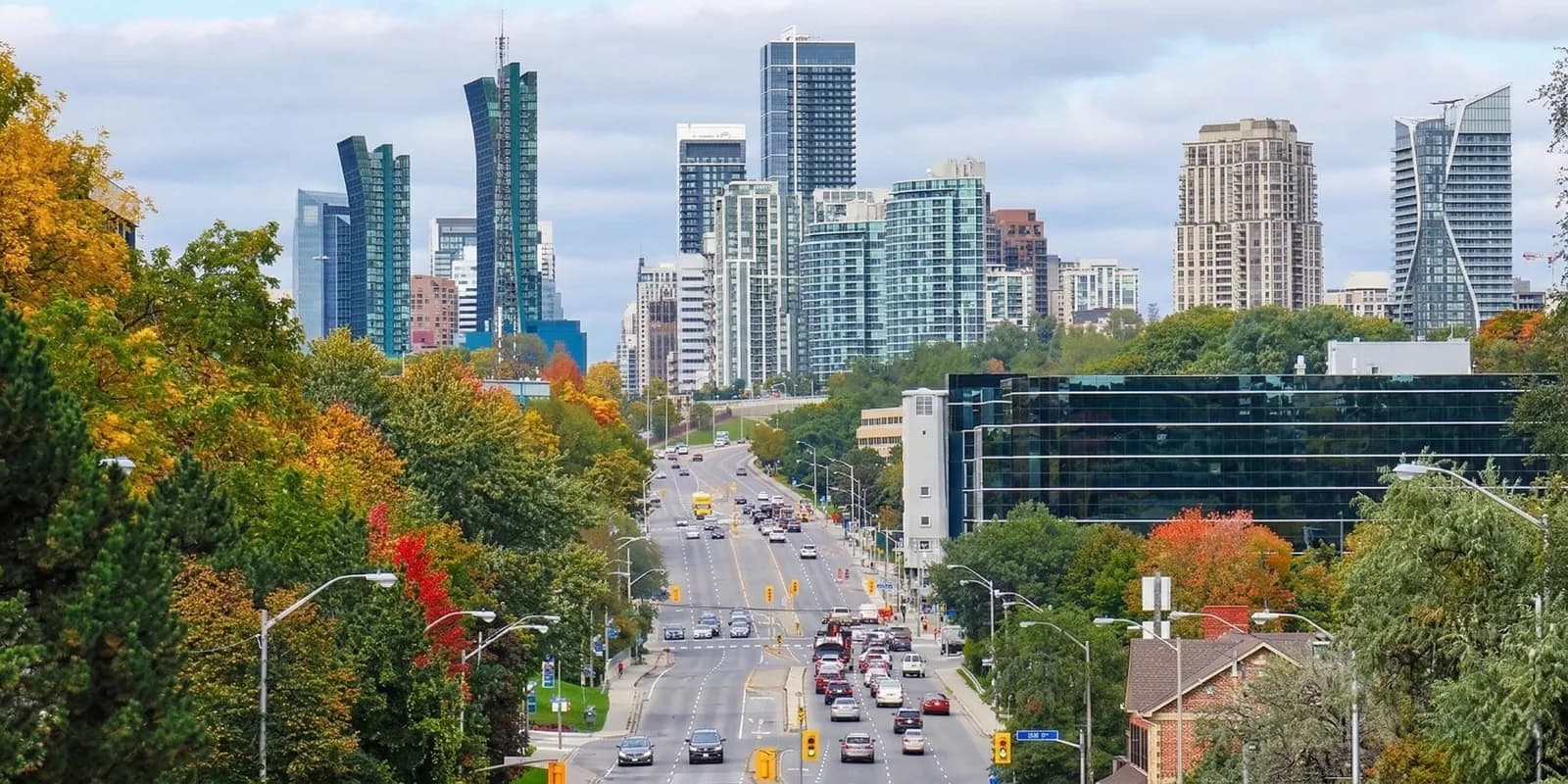
North York is home to more than 620,000 people, according to Statistics Canada 2021 Census data. Originally an independent city until Toronto's 1998 amalgamation, it remains one of the most self-contained districts in the GTA, with its own civic centre, performing arts venue, and a subway network that connects residents to downtown Union Station in under 35 minutes. If you are considering a move to North York, this pillar guide covers neighbourhoods, transit, schools, cost of living, and the practical logistics of relocating here.
Key Takeaways
- ✓North York has 620,000+ residents and 15-20% lower one-bedroom rents than downtown Toronto (source: CMHC 2025 Rental Market Report)
- ✓The TTC Line 1 subway connects Finch Station to Union Station in about 33 minutes
- ✓Top neighbourhoods include Willowdale, Bayview Village, Don Mills, York Mills, and the Sheppard Corridor
- ✓Earl Haig Secondary School ranks among the top 50 public high schools in Ontario (Fraser Institute, 2024)
- ✓A local North York move with 2 movers typically costs $796 to $995 all-in
## Why Do So Many GTA Residents Choose North York?
According to the City of Toronto neighbourhood profiles, North York ranks in the top three Toronto districts for transit accessibility, park space per capita, and school density. Its borders run from Steeles Avenue in the north to the 401 corridor in the south, spanning from the Humber River west to Victoria Park Avenue east. That central position within the GTA makes it practical for commuters, families, newcomers, and retirees alike.
The district functions as a city within a city. You can live, work, shop, and access healthcare without crossing its boundaries. North York General Hospital, Sunnybrook Health Sciences Centre, and dozens of medical clinics along the Yonge corridor mean you are never far from care. The North York Civic Centre houses government services, and the North York Central Library is one of the busiest branches in the Toronto Public Library system.
For people relocating from outside the GTA, North York offers a smoother landing than downtown Toronto. Rents are lower, grocery options are more affordable (thanks to T&T, Galleria, H Mart, and PAT Central), and the multicultural community means you will find familiar cuisines and settlement services regardless of your background.
Planning a Move?
Get a free, no-obligation quote in under 2 minutes.
## What Are the Best Neighbourhoods in North York?
Each North York neighbourhood has a distinct character. Your choice depends on budget, lifestyle, and whether you prioritize transit, green space, or school catchment areas.
**Willowdale** is the urban core of North York, centred on the Yonge and Sheppard intersection. It has direct subway access at both Sheppard-Yonge and North York Centre stations. The streetscape is packed with Korean barbecue restaurants, Japanese ramen shops, bubble tea cafes, and late-night eateries. Condo development along this corridor has been aggressive for the past decade, and one-bedroom rents average $1,800 to $2,100 per month according to the CMHC 2025 Rental Market Report. Young professionals and newcomers love the energy and convenience.
**Bayview Village** sits east of Yonge along Sheppard Avenue and offers a more residential, upscale feel. The Bayview Village Shopping Centre anchors the area with boutique retail. Tree-lined streets, proximity to the Don River ravine system, and excellent school catchments make it popular with established families. Detached home prices here reflect the premium, but the trade-off is a quieter pace within minutes of transit and full amenities.
**Don Mills** was designed in the 1950s as one of Canada's first master-planned communities. It features generous green spaces, curving streets, and a village atmosphere. The Shops at Don Mills transformed the old commercial centre into a modern open-air destination. The Ontario Science Centre sits at its southern edge (though it is currently undergoing redevelopment), and the Don Valley trail system is directly accessible. One-bedroom rents here are among the most affordable in North York, averaging $1,700 to $1,900.
**York Mills** is where North York becomes genuinely luxurious. Stately homes, mature trees, and deep ravine lots define this neighbourhood. It borders the Don Valley and offers a peaceful setting despite being minutes from Highway 401 and the York Mills subway station. The area includes some of Toronto's top private and public schools, and lot sizes give it a countryside feel within the city.
**The Sheppard Corridor**, stretching east from Yonge along Line 4 of the subway, has seen dozens of new condo towers in the past 15 years. This area offers the best value in North York for renters and first-time buyers, with newer units, competitive pricing, and direct subway access at Bayview, Bessarion, Leslie, and Don Mills stations. Fairview Mall and the Sheppard Centre provide convenient shopping.
## How Good Is North York's Transit Access?
North York has some of the best transit infrastructure in the GTA. The TTC's Line 1 Yonge-University subway runs through the heart of the district, with key stations at Finch, North York Centre, Sheppard-Yonge, and York Mills. According to TTC published schedules, the ride from Finch Station to Union Station takes approximately 33 minutes during regular service hours.
The Sheppard Line (Line 4) extends east from Sheppard-Yonge to Don Mills, serving the rapidly growing Sheppard corridor. For commuters heading beyond the city, GO Transit's Richmond Hill and Barrie lines have stations within easy reach, providing direct express service to Union Station.
Drivers benefit from proximity to Highway 401, the Don Valley Parkway, and Allen Road. However, Statistics Canada's 2021 Canadian Survey on Business Conditions found that Toronto's average commute time is 34 minutes by car and can spike well above that on the 401 during rush hour. If you can rely on the subway or time your commute outside peak hours, you will save significant stress and fuel costs.
The upcoming Ontario Line, expected to connect to the existing network by the early 2030s, will further improve transit options for North York residents commuting to midtown and downtown employment centres.
## What Schools Make North York Attractive for Families?
North York consistently ranks among the top education districts in the GTA. The Toronto District School Board (TDSB) operates dozens of elementary and secondary schools across the area, and the Fraser Institute's 2024 school rankings place several North York schools in Ontario's top 100.
Earl Haig Secondary School, located near Yonge and Sheppard, is one of the most sought-after public high schools in Toronto. It houses the Claude Watson Arts Program, which attracts students from across the city. Bayview Secondary School serves the eastern part of the district with strong academic and extracurricular programs. Don Mills Collegiate Institute and Northview Heights Secondary School round out the secondary options. Numerous elementary schools and French immersion programs are available throughout the district.
For families with children, school catchment boundaries should be a primary factor in neighbourhood selection. The TDSB provides an online tool for looking up school assignments by address. Moving to a specific school catchment area is one of the top reasons families choose Willowdale or Don Mills over other GTA neighbourhoods.
## How Does North York's Cost of Living Compare to Downtown Toronto?
North York offers meaningful savings compared to the downtown core. According to the CMHC 2025 Rental Market Report, average one-bedroom condo rents along the Sheppard corridor run 15 to 20 percent lower than comparable units downtown, while offering newer finishes and more square footage. A one-bedroom in the Yonge-Sheppard area averages $1,800 to $2,100 per month. Downtown equivalents typically start at $2,200 and climb from there.
Grocery costs are comparable across Toronto, but North York residents have access to more affordable options at independent Asian supermarkets. T&T Supermarket, Galleria Korean Market, H Mart, and PAT Central are neighbourhood staples that offer quality produce and specialty items at lower prices than mainstream chains.
Dining out is noticeably less expensive. The Yonge and Sheppard corridor is home to some of the best Korean, Chinese, Japanese, Persian, and Middle Eastern restaurants in the GTA. Meals at these restaurants typically cost 20 to 40 percent less than comparable quality downtown, because rent and operating costs are lower for the business owners.
For homebuyers, Statistics Canada and Toronto Regional Real Estate Board data show that North York condo prices average 10 to 15 percent below the City of Toronto average, though detached homes in premium neighbourhoods like York Mills and Bayview Village command prices well above the city median.
## What Amenities and Recreation Does North York Offer?
The North York Civic Centre, a modernist building designed by architect Taro Sasaki, houses government offices and the North York Central Library. Mel Lastman Square hosts seasonal events, a winter skating rink, and community gatherings throughout the year. The Toronto Centre for the Arts brings professional theatre, music, and dance to the neighbourhood.
Shopping ranges from the upscale Bayview Village to Centerpoint Mall, Fairview Mall, the Shops at Don Mills, and the Empress Walk complex. For daily needs, the Yonge and Sheppard area has pharmacies, banks, medical offices, and restaurants within walking distance of every major condo tower.
For outdoor recreation, Downsview Park covers 231 acres on the former Downsview military base and includes sports fields, trails, and event spaces. The Don Valley trail system provides kilometres of hiking and cycling directly accessible from Don Mills and Bayview Village. Earl Bales Park offers a ski and snowboard centre in winter. Dozens of community parks, splash pads, and playgrounds are scattered throughout the district, and the City of Toronto operates community centres with pools, gyms, and programming for all ages.
## What Should You Know About Moving Logistics in North York?
If you are moving into one of the many condo towers along the Yonge-Sheppard corridor, book your freight elevator 2 to 4 weeks in advance. These buildings are busy, and move-in slots fill up quickly, especially on weekends and end-of-month dates. Most buildings require a Certificate of Insurance from your moving company, restrict moves to specific hours (typically 9 AM to 5 PM weekdays), and may limit truck height for the loading dock.
Parking on Yonge Street is heavily restricted, so your movers will need to use side streets or the building's loading dock. If street parking is the only option, apply for a temporary parking permit from the City of Toronto at least 3 business days before your move.
Schedule your move to avoid Highway 401 during rush hour. Early morning starts on weekdays or Saturday moves work best. At Fast Track Move, we handle North York residential moves every week. Our crew knows every building, loading dock, and side street in the district. A standard local move within North York with 2 movers costs $796 to $995 all-in (3 to 4 hours at $199/hr plus $199 truck fee for distances under 25 km). For larger homes, a 3-mover crew at $259/hr keeps the job efficient.
Get a free moving quote tailored to your North York address and inventory.
## Who Is North York Best Suited For?
North York works for a wide range of residents, and data from the 2021 Census supports this diversity. The district has one of the highest proportions of immigrant residents in Canada, with over 50 percent of North York residents born outside the country.
Young professionals love the subway access, walkable urban corridors along Yonge Street, and the vibrant food scene. Families are drawn to the school system, green spaces, and community infrastructure. Newcomers to Canada find welcoming multicultural communities, settlement services at organizations like the North York Community House, and familiar cuisines from home. Retirees enjoy the quieter residential pockets in Bayview Village and York Mills, ravine walks, and convenient access to North York General Hospital and Sunnybrook Health Sciences Centre.
Whether you are coming from downtown Toronto, the suburbs, or another province entirely, the Fast Track Move team will help you settle into North York quickly and affordably. We have completed thousands of moves in this district, and our 955+ five-star Google reviews reflect the care we bring to every job.
## Frequently Asked Questions
### What is the average rent in North York?
According to the CMHC 2025 Rental Market Report, average one-bedroom rents in North York range from $1,700 to $2,100 depending on the neighbourhood. The Sheppard Corridor and Don Mills tend to be the most affordable, while Willowdale and Bayview Village command higher rents due to proximity to subway stations and premium amenities.
### How long is the commute from North York to downtown Toronto?
By subway, the TTC Line 1 takes approximately 33 minutes from Finch Station to Union Station during regular service. By car, commute times vary widely depending on traffic. During rush hour, the drive can take 45 to 75 minutes via the DVP or Highway 401. Off-peak, the same drive is typically 20 to 30 minutes.
### Is North York good for families with children?
Yes. North York is one of the top-rated education districts in the GTA, with schools like Earl Haig Secondary (Claude Watson Arts Program), Bayview Secondary, and Don Mills Collegiate consistently ranking in the TDSB's top tier. The area also offers extensive parks, community centres, and family-oriented programming through the City of Toronto.
### How much does a local move within North York cost?
A standard local move within North York with 2 movers typically costs $796 to $995 all-in (3 to 4 hours of labour at $199/hr plus a $199 truck fee for distances under 25 km). Three-mover crews run $259/hr for larger homes. All jobs have a 3-hour minimum. Get a personalized quote from Fast Track Move based on your specific address and inventory.
### What are the best neighbourhoods in North York for young professionals?
Willowdale and the Sheppard Corridor offer the best combination of transit access, nightlife, dining, and competitive condo rents. Both areas are within walking distance of subway stations and have a dense mix of restaurants, cafes, and services that appeal to professionals in their 20s and 30s.