Moving to Newmarket puts you in York Region's seat of government, a historic market town whose restored Main Street storefronts sit less than an hour from the heart of Toronto. At roughly 88,000 residents and a straightforward drive north on Highway 404 from our North York depot, Newmarket has become one of the GTA's steadiest draws for families who want small-town character, a walkable heritage core, and genuine detached-home space without leaving the region's job market and healthcare system behind. Fast Track Move has been running CVOR-certified crews across York Region since 2016, with 955+ five-star Google reviews behind that record, and this guide covers what actually changes neighbourhood by neighbourhood, what a Newmarket move costs this season, and how to plan around the town's heritage properties and Highway 404 corridor.
Key Takeaways
- ✓Newmarket is York Region's administrative seat, home to the York Region Administrative Centre and a historic Main Street heritage district dating to the nineteenth century
- ✓Southlake Regional Health Centre and the Davis Drive commercial corridor, anchored by Upper Canada Mall, drive a steady stream of healthcare and retail relocations into town
- ✓Highway 404 and the Barrie line's Newmarket GO Station keep the town connected to Toronto in roughly 40-50 minutes by car or train
- ✓A local move to Newmarket falls in our 50-80 km truck fee band from the North York depot: a flat $299, on top of hourly crew labour and 13% HST
- ✓Heritage homes along and near Main Street need extra care for narrow hallways, steep stairs, and original hardwood; newer Stonehaven and Glenway subdivisions move faster with more straightforward truck access
- ✓Book 3-4 weeks ahead for a peak-season (May-October) date; off-peak (November-April) rates run lower per crew size if your timeline is flexible
Why Families Choose Newmarket
Newmarket has spent the past decade absorbing a steady wave of families leaving Toronto, Vaughan, and Richmond Hill for more space at a lower price per square foot, without giving up a real downtown. The town sits within the York Region District School Board and York Catholic District School Board catchment, both well-regarded across Ontario, and Highway 404 puts the rest of the GTA within a manageable drive. We hear the same story on the phone every spring: a family has outgrown a condo or semi closer to the city, has spent months house-hunting north of Aurora, and wants to be unpacked and settled well before the September school bell.
What sets Newmarket apart from many GTA North towns is that it never fully lost its own identity to suburban sprawl. Yonge Street runs through the eastern side of town, past Upper Canada Mall and the newer commercial strips, but a few blocks over, Main Street still functions as a genuine downtown, with independent shops, cafes, and restaurants operating out of nineteenth-century storefronts. That combination, a real town centre plus modern retail and healthcare infrastructure, is a big part of what draws people north.
Main Street's Heritage Core
Newmarket's Main Street is the town's most distinctive feature and the reason so many buyers specifically target the older core rather than a newer subdivision. The street is lined with restored heritage buildings that date back well over a century, many still doing business as retail storefronts, restaurants, and offices. Riverwalk Commons, a waterside park at 200 Doug Duncan Drive right beside Main Street, adds a seasonal splash pad and an outdoor skating rink to the mix, along with a paved loop trail around Fairy Lake that connects into the wider Nokiidaa trail system running north and south of town.
Living in or near this heritage district means living with genuine character homes: narrow front hallways, wrap-around porches, steep interior staircases, and original hardwood that deserves floor runners rather than bare cardboard. It also means newer infill development has been added carefully alongside the older stock, so a single block can mix a Victorian-era house with a modern townhouse built to current building standards. Our crews plan these moves differently than a standard subdivision job, because the access, stair angles, and floor protection needs vary house to house rather than following one predictable layout.
Planning a Move?
Get a free, no-obligation quote in under 2 minutes.
Davis Drive, Southlake, and Upper Canada Mall
The Davis Drive corridor is Newmarket's modern commercial spine, and it is where most of the town's growth has concentrated over the past two decades. Upper Canada Mall anchors the retail side of the corridor, drawing shoppers from across York Region, while Southlake Regional Health Centre, a full-service hospital with a team of more than 3,000 staff and physicians, anchors the employment side. Southlake is regularly recognized as one of the GTA's leading employers, and it is the reason we handle a meaningful number of Newmarket moves tied directly to healthcare careers: nurses, physicians, and hospital staff relocating closer to work, or moving into town as Southlake expands its services.
Residential development along Davis Drive has followed the same pattern as the corridor's commercial growth, with a mix of townhome complexes, semi-detached homes, and newer mid-rise condominium buildings adding density to what used to be a low-rise town. These buildings increasingly come with the same requirements as downtown Toronto condos, including certificates of insurance for property management and booked freight elevator windows, so our dispatch team confirms building requirements well ahead of move day.
Newmarket Neighbourhoods at a Glance
Newmarket breaks down into a handful of distinct pockets, and where you land changes what your move actually looks like. Stonehaven and Bristol, in the town's northern and eastern reaches near Leslie Street, hold spacious detached homes on family-friendly street layouts, the kind of properties that draw young families out of the GTA's core with finished basements, home offices, and years of accumulated belongings. Armitage and Glenway are newer, tightly planned communities with a mix of townhomes and detached houses, generally easier for a crew to access than the older core because driveways and garages are built to current standards.
The Main Street South and Upper Canada Mall Area neighbourhoods sit closer to the commercial spine, mixing heritage properties near downtown with newer condo and townhome development closer to Davis Drive. Further west, the Mulock Farm and Fairy Lake areas offer some of Newmarket's most scenic residential settings, with homes overlooking green space and water, though narrow residential streets here mean our crews plan truck positioning and turnaround space before anything comes off the truck.
Getting Around Newmarket
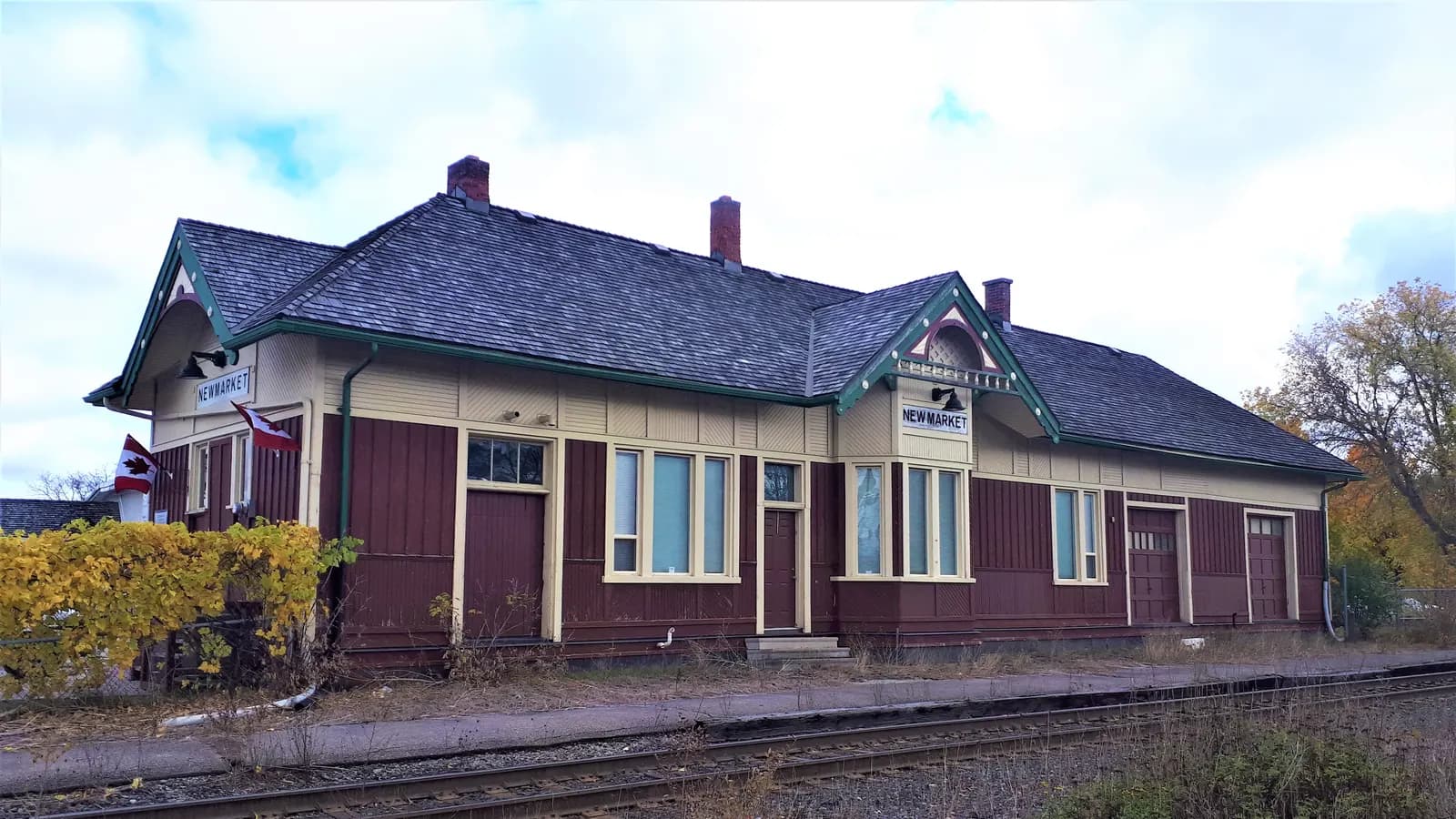
Highway 404 is the reason Newmarket works for commuters who still need reliable access to the rest of the GTA. It runs the length of the town north-south and connects directly into Highway 401, putting downtown Toronto within a manageable, if rush-hour-dependent, drive. For anyone commuting by rail, GO Transit's Barrie line stops at Newmarket GO Station on Davis Drive, a heritage-designated station building dating to 1900 that still serves as a working stop on the route into Union Station, with East Gwillimbury GO a short distance further north for anyone living on that side of town. York Region Transit runs local bus service connecting the Davis Drive corridor, Main Street, and the surrounding residential neighbourhoods.
That same road network shapes moving-day logistics. A move that looks quick on a map can run long if it crosses Highway 404 during rush hour, so our dispatch always builds a realistic drive-time buffer from the North York depot into the schedule rather than assuming off-peak travel times.
What a Newmarket Move Actually Costs
Newmarket sits in our 50-80 km local truck and travel fee band, measured one-way from our North York depot, which works out to a flat $299 truck fee regardless of home size. On top of that, you pay for crew and hours, with every job subject to a 3-hour minimum.
Here is a real worked example for a family moving from a Toronto or North York condo into a typical 3-4 bedroom detached home in Stonehaven or Bristol this season. A home this size realistically needs a 4-mover crew and runs about 8 hours on site. During peak season (May-October), a 4-mover crew bills at $319 per hour:
8 hours x $319/hour = $2,552 in labour + $299 local truck and travel fee = $2,851 subtotal + 13% HST ($370.63) = $3,221.63 total
Book the same move during off-peak season (November-April), when the 4-mover rate drops to $279 per hour, and the math changes: 8 x $279 = $2,232 in labour, plus the same $299 truck fee, for a $2,531 subtotal, plus HST of $329.03, for a total of $2,860.03, roughly $360 less than the peak-season price for an identical job. Any time beyond a job's minimum hours is billed in 15-minute increments, not rounded up to the next full hour.
Smaller and larger moves scale the same way. Here is how crew size, hours, and the flat $299 truck fee combine across the range of homes we move into Newmarket:
| Move type | Crew | Typical hours | Peak-season subtotal before HST* |
|---|---|---|---|
| Studio/1-bedroom apartment, Main Street corridor | 2 movers | 3-4 hrs (3-hr minimum) | $896-$1,095 |
| 2-3 bedroom home, Bristol/Armitage | 3 movers | 5-7 hrs | $1,594-$2,112 |
| 3-4 bedroom detached, Stonehaven/Glenway | 4 movers | 7-9 hrs | $2,532-$3,170 |
| 4+ bedroom heritage or estate home, central Newmarket | 5 movers | 9-12 hrs | $3,890-$5,087 |
*Includes the flat $299 local truck and travel fee from our North York depot. HST (13%) is always added as a separate line, never folded into the hourly rate. Off-peak (November-April) hourly rates run $20-$40 lower per crew size than the peak figures above.
Heritage Homes vs New Subdivisions: What Changes
A Main Street heritage move and a Stonehaven or Glenway subdivision move both count as "moving to Newmarket," but the two jobs run very differently on the ground. Older properties near the downtown core often have narrow front hallways, tight staircases, and original hardwood or trim that our crews protect with runners rather than standard cardboard. Parking and loading access can also be tighter on some Main Street blocks, so we confirm loading zones ahead of time rather than assuming a truck can pull directly up to the door.
Newer construction in Stonehaven, Bristol, Armitage, and Glenway is the opposite case: attached garages, wider driveways, and modern doorframes generally mean faster, more predictable loading, even though these homes tend to be larger and come with more furniture, finished basements, and home gym or office setups that add hours. Our specialty moving service covers the disassembly and careful handling that both property types can call for, whether that is a piano in a century home or a home gym in a newer Stonehaven build.
Common Mistakes to Avoid
A handful of mistakes come up repeatedly on Newmarket moves. The first is underestimating how long an older Main Street-area home takes to load; narrow stairwells and doorways slow a crew down in ways that square footage alone does not predict, so a job sized for a "standard" three-bedroom home can run past the estimate. The second is ignoring Highway 404 rush-hour timing when picking a start time; a twenty-minute drive from North York can stretch well past thirty minutes during the afternoon commute, which matters when a crew has a second job booked the same day.
The third mistake is waiting too long to book a peak-season date. May through October is our busiest window across York Region, and Newmarket's popularity with families timing a move around the school calendar means summer weekends fill up several weeks ahead. The fourth is overlooking building or street-level requirements for Davis Drive condos and some tighter Main Street blocks; confirming elevator bookings, loading zones, or parking permits a couple of weeks ahead saves real time on move day.
Planning Your Newmarket Move
Wherever you are landing in Newmarket, from a heritage home near Main Street to a new build in Stonehaven or Glenway, the planning basics stay the same: lock in your date as early as you can, flag any building or street-access requirements ahead of time, and build in a buffer for Highway 404 traffic. If you are changing addresses, Canada Post's mail forwarding service is worth setting up a couple of weeks ahead so nothing gets lost in the shuffle, and updating your address with ServiceOntario keeps your licence and health card current.
Fast Track Move has been running CVOR-certified crews across York Region since 2016, with 955+ five-star Google reviews behind that track record, and Newmarket, from the Main Street heritage core to the Stonehaven and Glenway subdivisions, is an area we handle regularly all year. We carry the insurance Davis Drive condo buildings ask for, we know how to protect original hardwood in a century home near downtown, and our crews treat a heritage property with the same care as a brand-new build. If you are planning a move to Newmarket, our Newmarket movers page has more detail on our local service, or call us at 647-931-2328 for a free, no-obligation quote. We will walk through exactly what your move needs, whether that is floor protection for original hardwood or an extra set of hands for a Stonehaven four-bedroom.