Moving to Brampton in 2026 usually means one thing: your household just got bigger, and you need somewhere to put it. Brampton has become the landing spot for GTA families outgrowing a one-bedroom condo in North York or a starter semi in Etobicoke, trading tight square footage for finished basements, three-car garages, and enough bedrooms that grandparents finally get a proper suite instead of the pull-out couch. The city's population has pushed past 650,000, and a large share of that growth is multi-generational households moving as a single unit rather than splitting across two smaller homes. Fast Track Move has spent years learning what that kind of move actually requires: a bigger truck, a longer crew day, and a real plan for Highway 410 on moving morning.
Key Takeaways
- ✓Brampton draws GTA families upgrading to bigger homes with finished basements and garage storage for multi-generational households
- ✓Neighbourhoods span century-old Four Corners heritage homes to brand-new Mount Pleasant towns built around the GO line
- ✓Highway 410 and Highway 407 ETR connect Brampton quickly to the rest of the GTA, but rush-hour timing still matters on move day
- ✓Newer subdivisions in Springdale and Castlemore sometimes mean navigating active construction access and shared driveways
- ✓A multi-generational move needs a bigger crew and the right truck size, not just more boxes — plan for it when you request your quote
- ✓Book 3 to 4 weeks ahead during peak season (May through September), since Brampton is one of the busiest moving corridors in the GTA
Why Families Are Moving to Brampton in 2026
Brampton sits about 40 kilometres northwest of Toronto's core, and it has spent the last decade absorbing more new households than almost any other city in the GTA West region. The draw is simple: more square footage for the money you have. A family that has been renting or squeezed into a smaller Toronto or Mississauga property can often move into a detached home in Brampton with a finished basement, a double or triple garage, and a backyard big enough for the trampoline everyone promised the kids. For multi-generational households, that extra space matters even more. A finished basement becomes a self-contained suite for aging parents. A larger kitchen means two generations can cook without stepping on each other, and an attached or detached garage holds the second fridge, the extra freezer, and the furniture that would never have fit in a condo storage locker.
Brampton is also one of the most culturally diverse cities in Canada, and that diversity shows up directly in its housing stock. Builders have responded to demand for larger family homes designed around extended households, with layouts that include secondary kitchens, additional main-floor bedrooms, and basements built with separate entrances from day one. Whether you're coming from a Toronto high-rise, a Mississauga townhouse, or another Brampton address entirely, our Brampton movers see the same pattern on repeat: bigger households, bigger volume, and a real need for a crew that has done this before.
Brampton Neighbourhoods at a Glance
Brampton is not one neighbourhood; it is six or seven distinct ones stitched together by Queen Street, Bovaird Drive, and the Gore Road corridor. Knowing which one you're headed to changes what your move actually looks like — a townhouse move in a construction-heavy new subdivision has almost nothing in common with backing a truck onto a narrow street near the Four Corners. Here's how the major areas compare.
| Neighbourhood | Home Type | Best For | Mover's Note |
|---|---|---|---|
| Mount Pleasant | New-build towns and singles | GO commuters, young families | Tight new-subdivision streets; check visitor parking rules |
| Springdale / Sandalwood | Townhomes and semis | First-time buyers, growing families | Active construction zones and shared driveways are common |
| Bramalea | 1960s-70s bungalows and split-levels | Multi-generational households, downsizers | Mature trees and narrow driveways need careful truck positioning |
| Heart Lake | Detached homes near conservation land | Families wanting green space | Longer driveways and some elevation changes |
| Castlemore | Large detached, estate-style homes | Big multi-generational households | High-volume moves; finished basements add hours |
| Downtown Brampton | Century homes and low-rise apartments | Heritage buyers, downtown renters | Narrow streets and tight stairwells around the Four Corners |
Mount Pleasant: New Builds on the GO Line
Mount Pleasant is the clearest example of Brampton's transit-oriented growth. The community was built around Mount Pleasant GO station on the GO Transit Kitchener line, and the streets radiating out from the station are almost entirely new construction: townhome blocks, semi-detached singles, and a scattering of detached homes, most built within the last fifteen years. Families choose Mount Pleasant because it offers a rail commute into Toronto without paying downtown prices, and because the neighbourhood was designed with parks, a library branch, and schools built in alongside the housing rather than added years later.
Planning a Move?
Get a free, no-obligation quote in under 2 minutes.
For a move into Mount Pleasant, the challenges are almost the opposite of an older neighbourhood's. Streets are wide enough for a truck, but visitor parking is often limited to marked spots, and some newer streets still have construction vehicles working a few doors down. Townhome complexes frequently share a driveway or a narrow laneway entrance, so confirming exact unit access before move day saves real time. If you're moving here from a Toronto condo, expect the opposite problem you're used to: instead of booking a freight elevator, you're coordinating around a builder's schedule.
Bramalea and Springdale: Two Sides of Family Brampton
Bramalea and Springdale sit at opposite ends of Brampton's growth timeline, and comparing them tells you almost everything about how the city has changed. Bramalea was one of Canada's first master-planned suburban communities, built starting in the late 1950s around what is now Bramalea City Centre. Its streets are mature, its bungalows and split-levels have had six decades to settle, and its lots tend to be wider than anything being built today. Multi-generational families are drawn here for exactly that reason: an older bungalow with a finished basement and a wide driveway is often easier to adapt into a two-family layout than a newer, narrower townhouse.
Springdale and the neighbouring Sandalwood area are the newer story, built out over the past two decades with dense blocks of townhomes and semi-detached homes aimed at first-time buyers and growing young families. Moving into Springdale often means dealing with a subdivision that is still partially under construction — temporary road configurations, shared driveways, and builder crews working nearby are common. Our crews plan around this routinely, but it's worth telling your moving coordinator in advance if your new street is still being finished.
Heart Lake: Living on the Conservation Edge
Heart Lake sits along the northern edge of Brampton, built around the Heart Lake Conservation Area and its trail network. Homes here tend to be established detached properties on larger lots, many backing directly onto green space or built along the rolling terrain that surrounds the conservation lands. It's a popular choice for families who want Brampton's affordability without giving up the feeling of living somewhere with actual trees and trails out the back door.
The terrain that makes Heart Lake appealing also shapes what a move here looks like. Driveways tend to be longer, some streets have real elevation changes, and homes backing onto the conservation area sometimes have limited turnaround space for a full-size truck. None of this is a problem for an experienced crew, but it does mean your movers should walk the route on Google Maps or Street View before move day rather than assuming every Heart Lake street is a standard suburban cul-de-sac.
Downtown Brampton and the Four Corners Heritage District
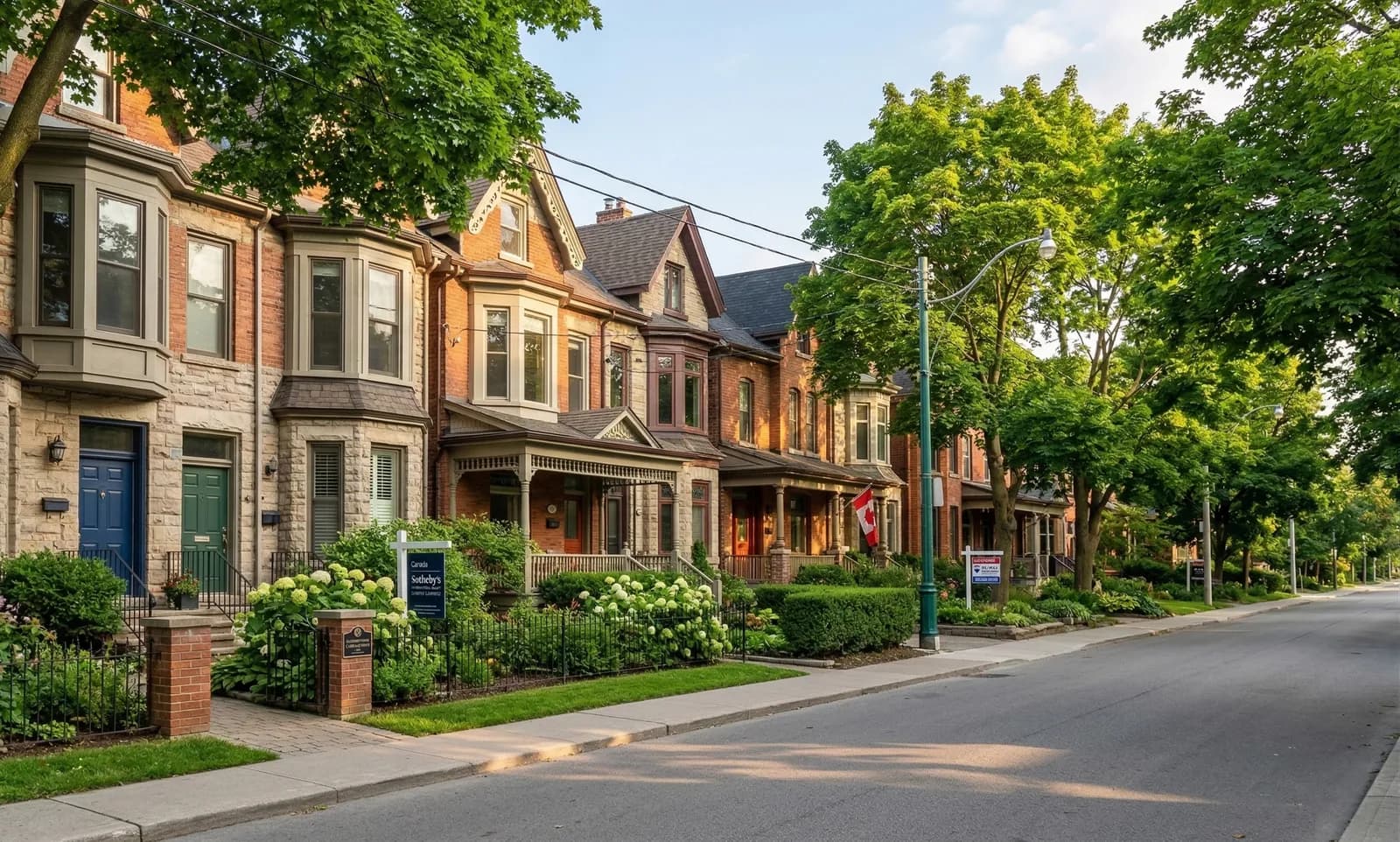
Downtown Brampton is the one part of the city that predates the building boom entirely. The Four Corners, where Main Street meets Queen Street, anchors a heritage district built around the Rose Theatre and Garden Square, with century homes, converted commercial buildings, and low-rise apartments lining the surrounding streets. It's a genuinely different moving environment from the rest of Brampton: narrow older streets, tight stairwells, original hardwood floors, and the occasional century-home detail that needs real protection rather than just a furniture blanket.
Parking is the other consideration downtown. Streets near the Four Corners were laid out long before anyone imagined a moving truck needing curb space, so permit parking and loading restrictions are worth checking with the City of Brampton before your move date, especially if you're moving into an apartment above one of the converted storefronts. Families relocating within the downtown core are usually moving from a smaller apartment or condo, so volume tends to be lower even if the access is trickier.
Commuting From Brampton: Highway 410 and Beyond
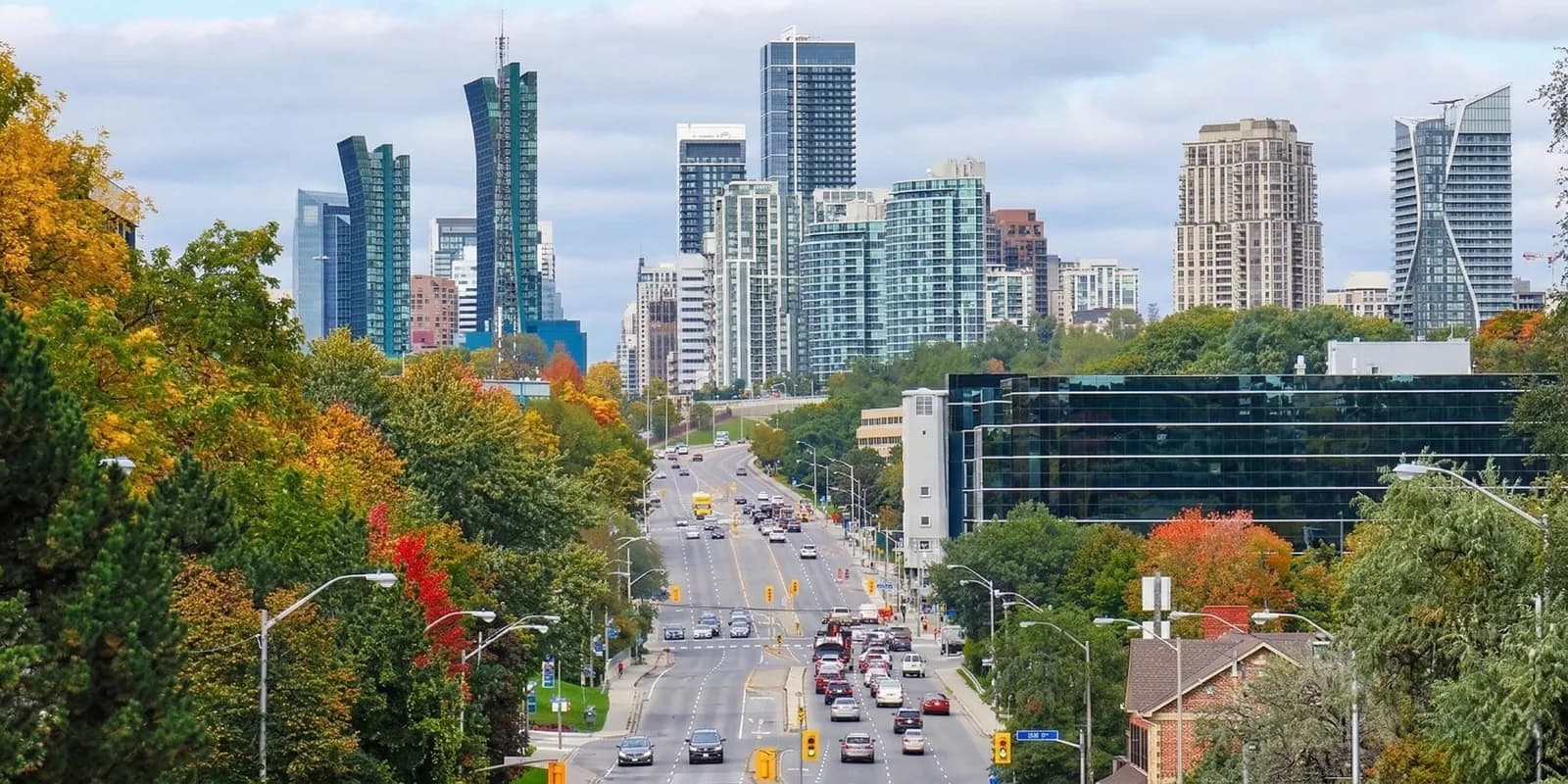
Brampton's road network is built around a few major arteries, and knowing them helps explain both the daily commute and the mover's-eye view of moving day. Highway 410 runs north-south through the centre of the city and is the fastest way in or out for most neighbourhoods, though it backs up like any GTA highway during the 7 to 9 a.m. and 4 to 6 p.m. windows. Highway 407 ETR crosses the southern part of the city and connects east-west to Mississauga, Vaughan, and beyond for a toll. Bovaird Drive and Queen Street handle most of the east-west traffic within Brampton itself, and both can slow to a crawl near Bramalea City Centre and the downtown core during peak hours.
For commuters, the GO Transit Kitchener line runs through Bramalea, downtown Brampton, and Mount Pleasant stations, giving residents in those specific areas a rail option into Union Station that skips the highway entirely. If your move is timed for a weekday, ask your movers whether an earlier or later start avoids the worst of the 410 traffic — a couple of hours' difference in start time can mean a meaningfully different drive for a crew making multiple trips between Brampton neighbourhoods.
Moving a Multi-Generational Household to Brampton
This is where a Brampton move earns its reputation as bigger and different from a typical GTA move. When two or three generations move together, you're not just moving more boxes — you're moving a second full kitchen's worth of appliances, a spare bedroom set for grandparents, and decades of heirlooms that need to travel carefully rather than just quickly. A move like this needs a crew large enough to keep pace with the volume and a truck sized for real furniture, not just a studio's worth of belongings.
Our approach to these moves starts with an honest inventory conversation before quote day, because a three-bedroom detached home with a finished basement suite moves very differently than the same square footage split across two apartments. Heirloom furniture, china cabinets, and family photos get wrapped and padded the same way regardless of age or value: moving blankets against every surface, corners protected first, and fragile boxes loaded last so nothing rides underneath heavier furniture. Disassembly matters more here too — bed frames, dining tables, and dressers for a second household need to come apart cleanly and go back together the same way in Brampton, with hardware bagged and labelled so nothing gets lost in transit.
If your move includes a gap between homes, whether that's a week of overlap or a month, our storage service can hold the second household's belongings safely until the new space is ready, rather than forcing everything into one chaotic move-in day.
What a Toronto-to-Brampton Move Costs
There's no single number for a move from Toronto to Brampton, because the real cost drivers have nothing to do with distance alone. Crew size matters most: a two-person crew works fine for an apartment, but a multi-generational detached home with a finished basement usually needs three or more movers to finish in a reasonable day. Volume is the next factor — a home with a second kitchen, extra furniture sets, and years of accumulated belongings simply takes longer to wrap, load, and unload than a comparable square footage with less inside it.
Access plays a role too. A Four Corners century home with a narrow staircase and no driveway takes longer to load than a Mount Pleasant townhouse with a driveway right at the door. Stairs, elevators, and how far the truck has to be parked from the front door all add or subtract time. Season matters as well: May through September is peak moving season across the GTA, and Brampton is no exception, so book further ahead if your date falls in that window. The most reliable way to get an accurate number is a proper walkthrough, in person or by video, rather than guessing based on square footage alone.
Booking Your Brampton Move the Smart Way
Whether you're moving a young family into a new Mount Pleasant townhouse, bringing three generations under one Castlemore roof, or settling into a century home near the Four Corners, the details above are exactly what a moving company should already know before your crew shows up. Confirm your neighbourhood's specific access challenges, ask for a crew sized to your actual household rather than a generic estimate, and update your address with Canada Post and the rest of your contacts well before move day.
Fast Track Move has been helping GTA families move into Brampton's full range of neighbourhoods, from heritage downtown streets to the newest Gore Road subdivisions, and we bring the crew size and truck to match your household, not just your square footage. Call us at 647-931-2328 for a free, no-obligation quote, and let's plan your Brampton move properly before moving day, not during it.