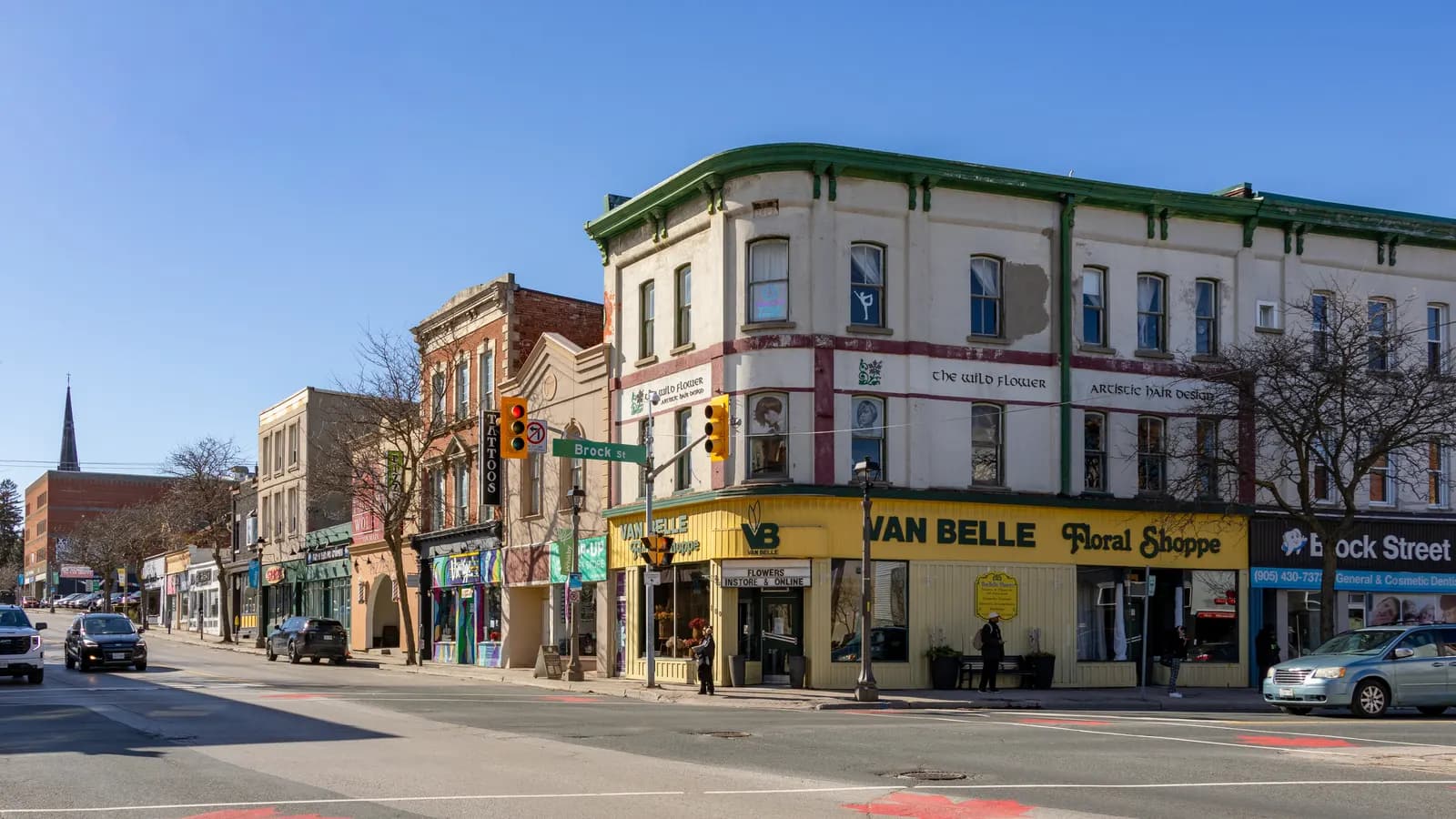
Whitby sits on the doorstep of the GTA's fastest-growing stretch of Durham Region, and moving to Whitby has become one of the more common calls we get from Toronto and North York families chasing more space without leaving commuter range of downtown. Between the historic storefronts of downtown Whitby's Brock Street, the sprawling new subdivisions of Brooklin in the north end, and a Lake Ontario shoreline families settle near for the schools and the water both, Whitby draws a different crowd than its bigger neighbour Oshawa next door. Fast Track Move has run the North York-to-Durham Region route since 2016, and this guide breaks down what a Whitby move actually costs, how the town compares to Oshawa, and which neighbourhood fits which family.
Key Takeaways
- ✓Whitby sits roughly 45 to 55 km from our North York depot, placing most of the town in our 25-50 km local truck fee band ($249); Brooklin's far north edge can tip into the 50-80 km band ($299) depending on the exact address
- ✓A 2-mover, 3-hour minimum move to Whitby in peak season (May-October) runs about $956 all-in with HST; a 3-bedroom family move with 3 movers over 5 hours runs about $1,745
- ✓Whitby and Oshawa sit next to each other on Lake Ontario, but they attract different buyers: Whitby leans toward established family neighbourhoods and well-regarded schools, while Oshawa's identity is built around Ontario Tech University and Durham College's student population
- ✓Whitby GO Station is on GO Transit's Lakeshore East line, with a ride to Union Station taking roughly 55 to 65 minutes
- ✓Downtown Whitby's Werden's Plan Heritage Conservation District protects 250 properties along Brock Street, while Brooklin in the north end is one of the GTA's fastest-growing new-home markets
- ✓Book 3 to 4 weeks ahead for a summer Whitby move, and 5 to 6 weeks ahead for late-August dates when family and back-to-school moves overlap
How Far Is Whitby From Our North York Base
Moving to Whitby means a shorter drive than heading to Oshawa, but it is still a genuine Durham Region trip, not a quick hop across town. Our crew departs from our North York depot, and the drive to Whitby runs roughly 45 to 55 km one way depending on which part of town you are headed to. Downtown Whitby and the Port Whitby waterfront, both south of the 401, sit toward the shorter end of that range; Brooklin, in the northwest corner, adds several kilometres up Baldwin Street and sits closer to the top.
That distance matters for pricing. Our local truck and travel fee is banded by distance: $199 for 0-25 km, $249 for 25-50 km, and $299 for 50-80 km. Most Whitby addresses, including downtown, Port Whitby, Williamsburg, and Pringle Creek, fall inside the 25-50 km band, so $249 is the number we quote for the majority of Whitby moves. Brooklin, at the far northern edge of town, can land in either the 25-50 km or 50-80 km band depending on the specific street, so we confirm the exact fee against your address rather than assuming. Moves further out, past Brooklin toward Myrtle or Ashburn, may shift into long-distance pricing, which starts at $750 and is quoted individually.
Highway 401 runs along Whitby's southern edge, and the 407 ETR crosses the north end of town, giving a faster tolled alternative that bypasses Scarborough and Pickering congestion. Outside rush hour, the drive from our base takes about 40 to 50 minutes; during commute windows, add 15 to 25 minutes.
What Does It Cost to Move to Whitby
Every Whitby quote follows the same formula: hours times the applicable hourly rate for your crew size, plus the truck and travel fee, plus 13% HST. All jobs carry a 3-hour minimum, and rates step up during peak season (May through October) versus the quieter off-season (November through April).
Planning a Move?
Get a free, no-obligation quote in under 2 minutes.
For a studio or one-bedroom apartment, 2 movers is usually enough. At the peak-season rate of $199 per hour with the 3-hour minimum, that is 3 hours times $199 for $597 in labour. Add the $249 local truck fee that covers most of downtown and south Whitby and you get an $846 subtotal; HST at 13% adds $109.98, for a total of roughly $956.
For a typical 3-bedroom family home, 3 movers over 5 hours is a realistic estimate. At $259 per hour for a 3-person crew, that is 5 hours times $259 for $1,295 in labour. Add the same $249 truck fee for a $1,544 subtotal, then $200.72 in HST, for a total of roughly $1,745.
If your move date falls in the off-season, the same 2-mover apartment move drops to $159 per hour: 3 hours times $159 is $477, plus the $249 truck fee is $726, plus $94.38 in HST, for a total around $820 — a savings of over $135 simply from moving in January instead of July.
Here is how the numbers scale across home sizes at peak-season rates, using the $249 truck fee that covers most of Whitby and realistic hour ranges for each size of home:
| Home Size | Crew Size | Peak-Season Hours | Estimated Total (incl. truck fee + HST) |
|---|---|---|---|
| Studio / 1-bedroom | 2 movers | 3-4 hours | $956-$1,181 |
| 2-3 bedroom | 3 movers | 5-7 hours | $1,745-$2,330 |
| 3-4 bedroom | 4 movers | 7-9 hours | $2,805-$3,526 |
| 4+ bedroom | 5 movers | 9-12 hours | $4,339-$5,692 |
These ranges assume a standard local Whitby move with no piano, long carries, or unusual access issues, and use the $249 truck fee that applies to most of the town. Brooklin addresses at the far north edge may fall into the $299 band instead, adding roughly $44 before tax. Stairs and extra stops add time on top. For an exact number, get a free quote and we will walk through your inventory within a few hours.
Whitby vs Oshawa: Which Durham Region Move Fits You
Whitby and Oshawa sit next to each other on the Lake Ontario shoreline and share the same GO Transit line, but on the ground the two towns feel different, and it matters when you are choosing between them.
Oshawa is the bigger of the two, anchored by Ontario Tech University and Durham College sharing a north-end campus, which brings a heavy, predictable wave of student rentals and a younger, more transient population on top of its established neighbourhoods. Whitby skews toward long-term family ownership, driven far more by move-up buyers leaving Toronto and Scarborough for a detached home with a yard than by student demand. Its school catchments are a genuine draw on their own: Donald A. Wilson Secondary School posted the top score among Durham Region high schools in recent Fraser Institute rankings, with Henry Street High School close behind.
The two downtowns read differently too. Oshawa's core is a larger, ongoing revitalization project built around Simcoe Street. Whitby's downtown along Brock Street is smaller, more intact, and formally protected: the town's Werden's Plan Neighbourhood Heritage Conservation District covers 250 properties, keeping the Victorian and Edwardian streetscape largely as it was. If a walkable, small-town main street matters to you more than a bigger city's amenities, that is a real, checkable difference between the two.
Cost-wise, Whitby's closer position to Toronto shows up directly in the truck fee: most of Whitby falls in our 25-50 km band ($249), while most of Oshawa falls in the next band up (50-80 km, $299); hourly labour rates are identical since both towns sit inside our standard local service area. If you are weighing Whitby against our Oshawa coverage, the Oshawa moving guide covers that town in the same depth. Short version: pick Whitby for an established, family-first, walkable-downtown feel and a shorter drive; pick Oshawa for more house per dollar and a livelier, university-driven population.
Why Families Are Choosing Whitby
Whitby's reputation as a family town is not just marketing copy. Its population grew from 128,377 in the 2016 census to 138,501 in the 2021 census, a 7.9 percent jump in five years, and that growth has continued to lean toward families rather than the single demographic wave that drives Oshawa's student-heavy numbers.
Schools are a big part of the pitch. Under the Durham District School Board, Whitby is home to some of the region's highest-scoring schools: Donald A. Wilson Secondary School and Henry Street High School both post strong Fraser Institute results, and at the elementary level, John Dryden Public School in Rolling Acres and Whitby Shores Public School near the lake are both consistently well-regarded. Families researching a move here tend to ask about catchment boundaries first, so confirm the exact school your address feeds into before you commit to a street.
Recreation keeps pace with the schools: the Iroquois Park Sports Centre in the south end anchors a large multi-rink, aquatic, and fitness complex, and the park system connects neighbourhoods to the waterfront and the Lynde Shores and Heber Down conservation areas without much of a drive. For a family leaving a Toronto condo, school quality plus park access plus detached-home affordability is usually the entire case for Whitby.
Downtown Whitby and Brooklin: Two Very Different Moves
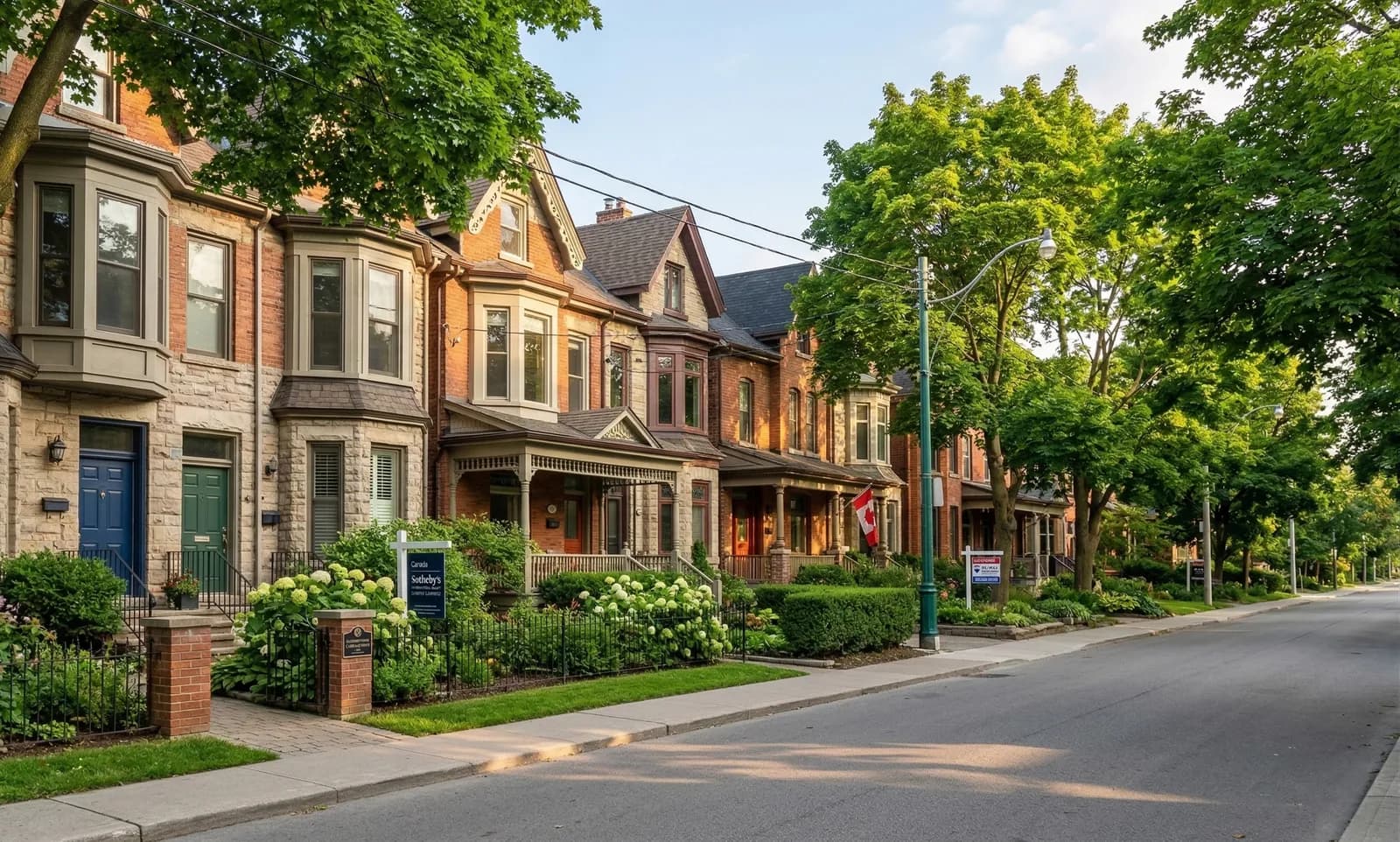
Whitby is not one uniform town, and the moving logistics change block by block. Downtown Whitby, centred on Brock Street, is the historic core: Victorian and Edwardian storefronts, narrow older lots, and on-street parking that fills up fast near the Whitby Public Library and the Promenade shops. Moves here often mean older staircases, tighter doorways, and a crew that plans the parking situation before the truck shows up.
Brooklin, in the northwest corner, is the opposite story. Once a small rural village, it is now one of the GTA's hottest new-home markets, with large subdivisions of detached homes, townhouses, and semis pulling families in. Our crews are in Brooklin constantly for first-occupancy moves, coordinating with builders on possession dates and working around unfinished sidewalks and construction traffic.
In between, Williamsburg and Pringle Creek offer established, family-oriented streets with larger lots than the newest Brooklin builds, while Port Whitby combines older housing stock with new development along the water, and Rolling Acres and Taunton split the difference on price.
Life on the Water: Whitby's Stretch of the Waterfront Trail
Whitby's shoreline is one of its most underused selling points against Toronto living. The Waterfront Trail runs roughly 19 km along Whitby's section of Lake Ontario, largely paved and off-road, connecting Thickson's Woods — the last remnant of old-growth white pine on this stretch of the north shore — through the Lynde Shores Conservation Area, past Whitby Harbour and the Port Whitby Marina, and along Iroquois Beach. It is a direct westward continuation of the same shoreline trail that runs through Oshawa, so a Whitby move puts you on the same cycling and walking network without driving to reach it — a genuine quality-of-life difference from most Toronto neighbourhoods, where lake access usually means fighting summer crowds at a handful of beaches.
Commuting to Toronto: GO Train and Highway 401
For anyone weighing a Whitby move against staying in Toronto, the commute is usually the deciding question. Whitby GO Station sits on GO Transit's Lakeshore East line, with regular service through peak hours; the ride to Union Station takes roughly 55 to 65 minutes depending on the specific train and how many stops it makes.
That is a noticeably shorter ride than Oshawa's roughly 60-to-75-minute trip, since Whitby is one stop closer to the city — a real difference for a daily five-day-a-week downtown commuter. Drivers have the 401 along Whitby's southern edge and the 407 ETR as a tolled alternative for anyone working outside the downtown core. Test your actual commute at real work hours before you commit to a lease or a purchase.
Planning Your Whitby Move: What to Get Right
Confirm your exact pickup and drop-off addresses early, since the difference between downtown Whitby and north Brooklin can shift your truck fee band and drive time. If you are moving into a new-build in Brooklin, check your builder's possession-date and driveway-access rules before locking in a date, since builder closings can shift with little notice. If you are moving into the downtown heritage district, flag any narrow stairwells or tight doorways when you book so we send the right crew and equipment, and confirm street parking near Brock Street ahead of time.
If you are moving a long-time family home rather than a new-build, start decluttering three to four weeks out — accumulated volume, not distance, is the single most common reason a job runs longer than estimated. Ask about our packing services if you are short on time; a full pack for a 3-bedroom home typically adds $400 to $700.
Moving to Whitby With Fast Track Move
We have run the North York-to-Whitby route for years, and with 955+ five-star Google reviews across our service area, our crews know this corridor well: the highway options, the downtown parking realities, and the Brooklin new-build rush. We are CVOR-certified, fully WSIB-covered, and issue a certificate of insurance as standard whenever a building or a builder requires one.
If you are planning a move to Whitby — a downtown heritage home, a new-build in Brooklin, or a waterfront property near the marina — get a free, no-obligation quote or call us at (647) 931-2328. We will confirm your dates, inventory, and exact truck fee band so there are no surprises on move day.
Frequently Asked Questions
Is Whitby better for families than Oshawa?
Both are strong options, but they skew differently. Whitby leans toward established family neighbourhoods and well-regarded schools, while Oshawa's identity is shaped more by Ontario Tech University and Durham College's student population. Whitby also has a slightly shorter GO commute and a smaller truck fee band from our North York base.
What is the best time of year to move to Whitby?
Peak season (May-October) applies across the GTA, and Whitby's busiest stretch mirrors the rest of Durham Region: mid-August through the first week of September, when family moves ahead of the school year overlap with month-end lease turnover. Book 5 to 6 weeks ahead for that window, and 3 to 4 weeks ahead otherwise.