Moving to Toronto means joining nearly three million people in Canada's largest city, and it means planning a move where the logistics change block by block. A Liberty Village hard loft, a CityPlace tower, a Victorian semi in Leslieville, and an Edwardian house in The Annex are four completely different moving jobs, even though they sit within a twenty-minute drive of each other. Fast Track Move has been running crews into every corner of the city from our North York depot since 2016, with 955+ five-star Google reviews, CVOR-certified trucks, and WSIB-covered movers. This guide walks through the neighbourhoods, the condo rules, the real costs, and the timing decisions that make moving to Toronto go smoothly instead of stressfully.
Key Takeaways
- ✓Toronto splits into two kinds of moves: high-rise condo moves built around elevator bookings and insurance paperwork, and house moves where stairs, parking, and street width set the pace
- ✓Downtown condo buildings typically want a freight elevator booked two to four weeks ahead and a Certificate of Insurance on file before they confirm the slot
- ✓Hourly rates run $159 to $459 depending on crew size and season, plus a flat local truck fee of $199 to $249 for most Toronto moves
- ✓The 401, DVP, Gardiner Expressway, and QEW dictate moving-day routing, and rush hour can double a crosstown drive
- ✓Off-peak season (November through April) is meaningfully cheaper than peak (May through October), and mid-month weekdays beat month-end weekends
- ✓Street parking in older neighbourhoods often needs a temporary City of Toronto permit arranged in advance
Why People Keep Moving to Toronto
Toronto absorbs more newcomers than any other Canadian city: new immigrants, students arriving for U of T, TMU, and York, professionals transferring into the Financial District, and GTA residents trading a suburban commute for a walkable postal code. Whatever brings you here, the practical question is the same. The city's housing stock runs from 1880s Victorians to towers finished last year, and each type of home carries its own move-day rules.
That variety is why generic moving advice falls apart in Toronto. The checklist for a King West condo has almost nothing in common with the checklist for a Roncesvalles century home. Toronto movers who work the city daily plan around the building first and the distance second, because in this city the building is usually the harder variable.
Toronto Neighbourhoods at a Glance
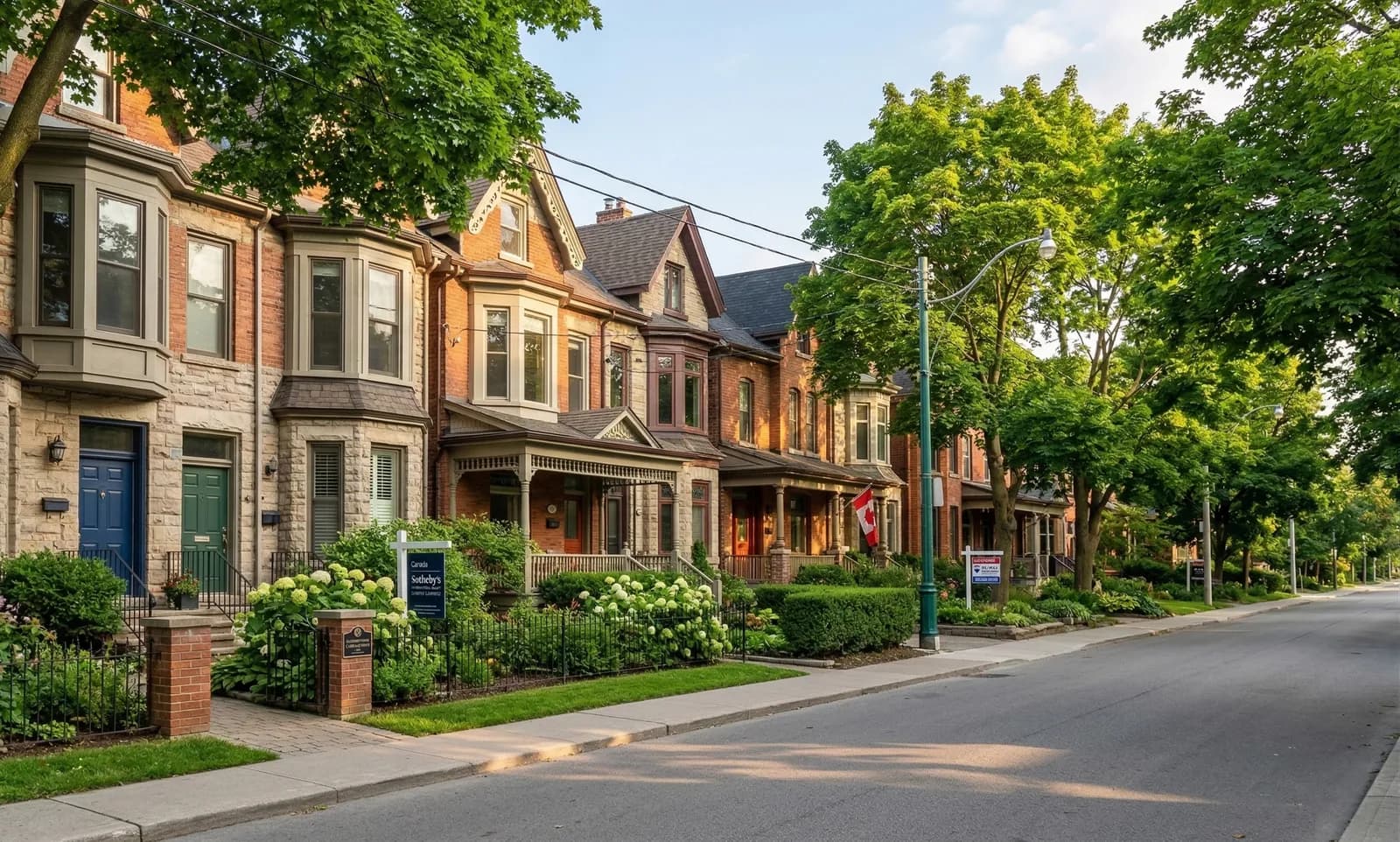
Toronto's neighbourhoods sort roughly into three moving profiles. The downtown core and its shoulders — the Financial District, King West, CityPlace, Liberty Village, the Entertainment District — are condo territory: towers with concierges, loading docks, and booking rules. The old streetcar neighbourhoods that ring the core — The Annex, Roncesvalles, High Park, Parkdale, the Junction on the west side; Leslieville, Riverdale, and The Beaches on the east — are dominated by Victorian and Edwardian houses on narrow lots. And midtown plus the inner suburbs — Yonge-Eglinton, Davisville, and up into North York and Scarborough — mix newer towers with post-war houses on wider streets, which usually makes them the most straightforward moves in the city.
Here is how the profiles compare when the truck actually shows up.
Planning a Move?
Get a free, no-obligation quote in under 2 minutes.
| Area | Typical housing | Move profile | Plan for |
|---|---|---|---|
| CityPlace / Liberty Village | New towers and hard lofts | One-bedroom Toronto condo move | Freight elevator booking, COI, fixed dock windows |
| Financial District / King West | Condo towers over retail | Downtown condo move | After-hours dock access, one-way streets |
| The Annex / Rosedale | Victorian and Edwardian houses | Multi-floor family move | Stair carries, doorframe and floor protection |
| Leslieville / The Beaches | Victorian semis on small lots | Family house move | Street parking permits, shared laneways |
| Roncesvalles / High Park | Century homes and walk-ups | House or low-rise move | Streetcar routes, narrow staircases |
| Yonge-Eglinton / Midtown | Mixed condos and post-war houses | Condo or house move | Elevator bookings in newer towers |
If you are still choosing where to land, our guide to the best neighbourhoods in Toronto for families digs into schools, parks, and housing in more depth. For move planning, the table above tells you most of what changes.
Moving to Downtown Toronto: Condo Logistics
If you are moving to downtown Toronto, odds are strong the destination is a condo, and condo moves run on paperwork and scheduling more than muscle. Nearly every managed building requires a freight or service elevator booking, and property management typically wants two to four weeks' notice — more from May through September, when weekend slots disappear fast. Before the booking is confirmed, most buildings also require a Certificate of Insurance from your moving company, usually $2 million to $5 million in liability coverage naming the condo corporation as additional insured. We issue COIs as standard, but a building can take several business days to approve one, so this is a first-week task, not a final-week task.
Loading docks are the other fixed constraint. Some towers have generous underground docks; others share a single dock between buildings, which means your window is exact and non-negotiable. In CityPlace and Liberty Village, where several towers can share one access lane, a crew that misses its window may wait hours for the next one. An experienced condo moving crew sequences the drive time, the dock window, and the elevator window so all three line up — that sequencing is most of what you are paying for downtown.
House Moves: The Annex to The Beaches
Toronto's older house neighbourhoods trade elevator paperwork for physical challenges. Victorian and Edwardian homes in The Annex, Cabbagetown, Roncesvalles, and Leslieville were built with staircases and doorframes sized for another century. Original trim, plaster walls, and ninety-year-old hardwood all need protecting before the first box moves: padded door jambs, floor runners, corner guards, and a slower first hour while the crew preps the route. Rosedale and Forest Hill add winding streets, mature tree canopy, and larger, heavier furniture that often calls for extra wrapping or crating.
Parking is the quiet complication. Many of these streets are permit-only, narrow, or both, and a shared laneway in Leslieville or The Beaches may be the only truck access. If your movers need a guaranteed spot, a City of Toronto temporary on-street parking permit is worth applying for a couple of weeks ahead. It is a small line item that prevents the most common house-move delay in the old city: circling for a legal place to put a 20-foot truck.
What Moving to Toronto Costs in 2026
Professional movers in Toronto price by crew size and season. Our published rates run $159/hr for two movers in the off-peak months (November through April), $199/hr in peak season (May through October), and $229/hr for holiday or inside-48-hour bookings. Three movers — the most popular crew for two- and three-bedroom homes — run $219/$259/$315 across those same tiers. Four movers run $279/$319/$387, and five movers run $319/$399/$459 for large houses and commercial jobs. Every job carries a 3-hour minimum.
On top of labour, a flat truck fee covers the vehicle and travel from our North York depot: $199 for moves within 25 km, $249 for 25 to 50 km — the band most downtown Toronto moves fall into — and $299 for 50 to 80 km. In practice, a one-bedroom Toronto condo move at the 3-hour minimum with a 2-mover crew runs roughly $760 to $900 including HST depending on season, and a three-bedroom house move with a 3-mover crew over six to seven hours runs roughly $1,700 to $2,100 including HST, with season, stairs, and packing volume driving where you land inside those ranges. If you want to trim the bill, professional packing is optional, but a well-packed home is the single biggest factor in how fast the billable hours go.
Getting Around: TTC, GO and the Highways
Toronto's transportation network shapes both your new commute and your move day. The TTC runs two main subway lines — Line 1 Yonge-University, which loops down through midtown and the core, and Line 2 Bloor-Danforth, which runs east-west across the old city — plus streetcars on King, Queen, Dundas, and College. If you are landing near a Line 1 or Line 2 station, you may find the car optional; plenty of downtown residents keep only a transit pass and a bike. GO Transit fans out from Union Station for anyone keeping a job outside the core.
For the move itself, the highways matter more. Highway 401 runs across the top of the city, the Don Valley Parkway feeds the east side down into the core, the Gardiner Expressway runs along the lake, and the QEW carries traffic west toward Mississauga and Hamilton. All four are notorious at rush hour: a crosstown run that takes 25 minutes at 10 AM can take an hour at 5 PM. We route around the worst windows and build a realistic buffer into every quote, but if you control your own schedule, a mid-morning start on a weekday is the cheapest traffic insurance there is.
Timing Your Toronto Move
Season is the biggest price lever in the city. May through October is peak: rates step up, weekend slots fill weeks ahead, and downtown freight elevators become the scarcest resource in the city. November through April is off-peak, meaningfully cheaper per crew tier, and the trade-off is weather. Winter moves in Toronto are entirely doable with the right prep; the crews salt, lay runners, and wrap everything against slush, and you often get better availability and pricing in exchange.
Within any month, the calendar crunch is real: leases and closings cluster around the 1st and the 15th, so month-end weekends book out first at every moving company in the GTA. A mid-month Tuesday is consistently the easiest day to book, the lightest traffic, and the calmest version of moving day this city offers.
Common Mistakes to Avoid
The mistakes we see on Toronto moves repeat themselves. Booking the freight elevator too late is the most common: by the time some downtown movers-in call their property manager, every weekend slot for the month is gone. Call the building the day you firm up your move date, even before you have picked a moving company.
Second is underestimating the old housing stock. A Leslieville semi or Annex Victorian routinely holds more than its square footage suggests — full basements, attics, and decades of storage — and older staircases slow every carry. Be honest about volume when you get your quote, and the estimate will actually hold.
Third is planning the drive off a Sunday-afternoon memory of the city. The DVP and Gardiner at 4:30 PM on a Friday are a different world, and a move scheduled without a traffic buffer pays for the optimism in billable time. Finally, set up Canada Post mail forwarding a couple of weeks before the move — between condo mailrooms and new postal codes, it is the cheapest protection against lost cheques and government mail.
Planning Your Toronto Moving Day
Wherever in the city you land, the sequence is the same: lock the move date, confirm building requirements or parking permits early, declutter before you pack, and keep the paperwork moving while the boxes pile up. Toronto rewards preparation more than any other GTA city because so many pieces — elevators, docks, permits, traffic — sit outside your control unless you claim them early.
Fast Track Move has served Toronto since 2016, from CityPlace studio moves to Rosedale family homes, with CVOR-certified trucks, WSIB-covered crews, and 955+ five-star Google reviews behind the work. Our Toronto movers page has more on our local service, or call 647-931-2328 for a free, no-obligation quote. Tell us the building and the neighbourhood, and we will tell you exactly what your move needs — including the elevator booking you should make this week.