Apartment movers in North York deal with a different set of problems than condo movers do, and almost nobody writes about the difference. Most moving advice online for this area assumes you are dealing with a concierge, a bookable freight elevator, and a property management office that emails you a move-in package. If you are renting a walk-up on a side street off Sheppard, or a unit in an older low-rise building near Bathurst Manor or Downsview, none of that applies. You have a superintendent, maybe one small passenger elevator shared with forty other tenants, and a set of stairs that your movers will be walking up and down all afternoon. This guide is about that kind of move, not the condo kind.
Key Takeaways
- ✓ KEY TAKEAWAYS:
- ✓ - Rental apartments differ from condos in almost every logistical way: a superintendent instead of a concierge, no bookable freight elevator, and often no elevator at all
- ✓ - North York has a large stock of mid-century walk-up buildings, so stairs are a routine part of apartment moving here, not an exception
- ✓ - A landlord cannot charge a separate moving fee or key deposit beyond the reasonable cost of the key, per the Landlord and Tenant Board
- ✓ - The last month's rent deposit can only be applied to your final month of rent — it is not a damage or cleaning deposit
- ✓ - Ending a monthly tenancy requires written notice on Form N9, generally 60 days before the end of a rental period
- ✓ - A typical 1-bedroom apartment in North York is usually a 2-mover job; a walk-up with stairs often bumps that to 3
Renting Is Not The Same As Owning A Condo
The condo moving guides you find for North York are written for a different building type. A condo has a concierge desk, a property management office, a certificate-of-insurance process, a bookable freight elevator with a deposit attached, and a board that sets the rules. A rental apartment in North York very often has none of that. Instead of a management office, you have a superintendent who lives on-site or nearby and handles the building day to day. Instead of a freight elevator reservation system, you might have one small passenger elevator that every tenant on every floor uses, with no way to book it exclusively. In a lot of the older buildings scattered through Willowdale, Bathurst Manor, Downsview, and the streets around Sheppard and Finch, there is no elevator at all — just a walk-up with two or three flights of stairs. None of this makes a rental move worse than a condo move. It just makes it different, and the movers you hire need to understand that difference before they show up.
Why Walk-Ups Are So Common Here
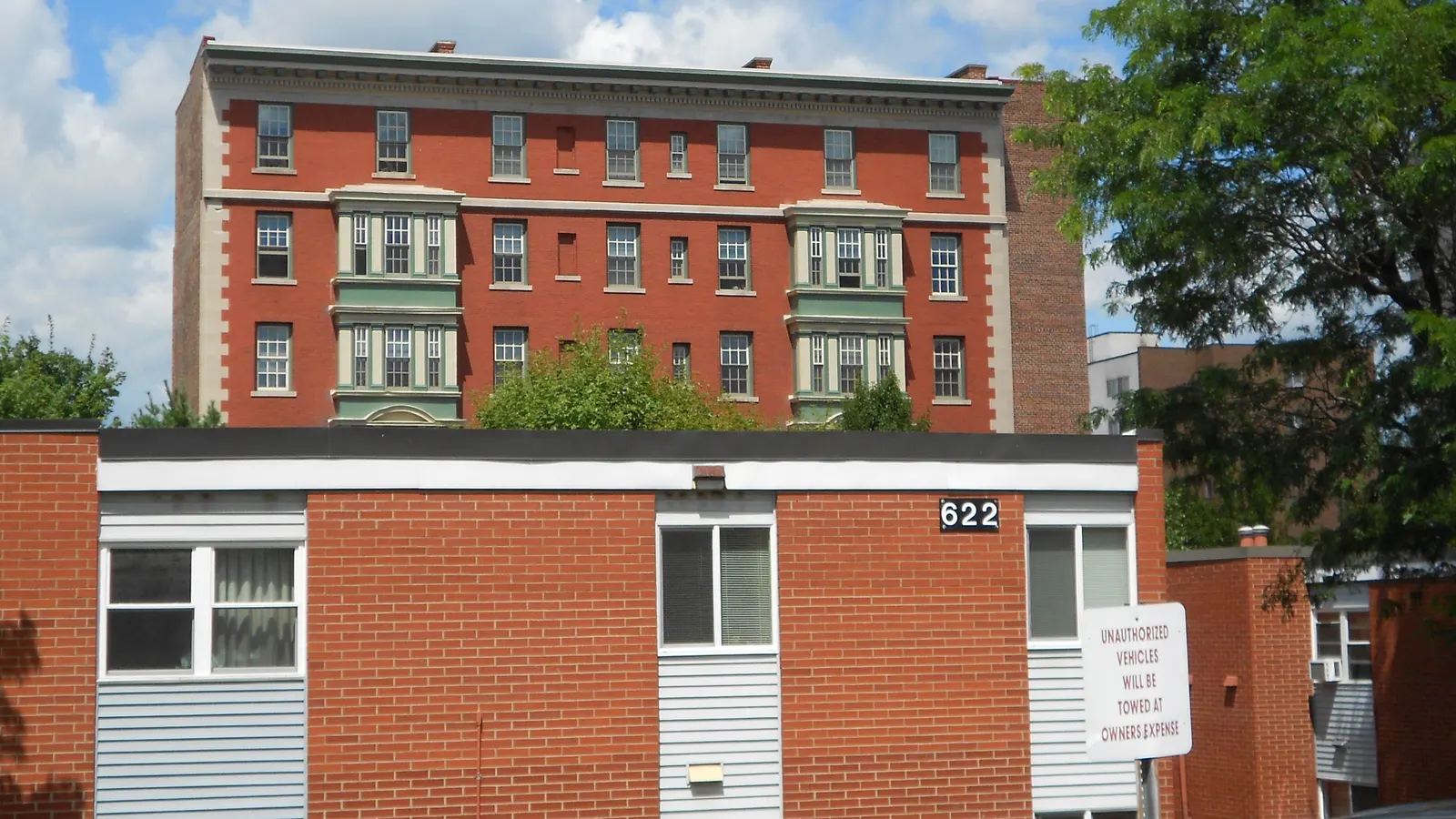
North York went through a major wave of apartment construction in the 1950s, 60s, and 70s, and a lot of that stock is low-rise walk-up buildings — three or four storeys, no elevator, narrow stairwells, and landings just wide enough for a couch to make the turn if your crew knows what they are doing. If you are moving into or out of one of these buildings, stairs are simply part of the job, not an unusual complication. Every flight adds time. A crew carrying a sofa, a mattress, and boxes up three flights works measurably slower than the same crew unloading directly into a ground-floor unit or a building with a working elevator. That extra time is the single biggest cost driver on a rental apartment move, more than distance and more than the volume of belongings in most cases. Be honest with your movers about the stair count and the landing width when you book, because it directly affects how many people show up and how long the job takes.
Coordinating With A Superintendent, Not A Concierge
In a condo, the concierge or the property manager runs interference: booking the elevator, confirming the certificate of insurance, watching the loading dock. In a rental building, that job usually falls to the superintendent, and supers vary widely in how hands-on they are. Some are happy to prop open a service door or hold an elevator car for twenty minutes. Others are hard to reach and do not respond until the day before your move. It is worth introducing yourself to your building's superintendent a week or two ahead of moving day, confirming whether there are any building rules about moving hours, whether the loading area at the back or side door is kept clear, and whether there is a service entrance separate from the main lobby. A five-minute conversation now avoids a lot of confusion on the day itself.
Sharing The Elevator In Older Rental Towers
Some North York rental buildings, particularly the mid-rise towers along the Yonge corridor near Sheppard and in Flemingdon Park, do have an elevator, but it is a single passenger unit shared by the whole building, not a dedicated freight elevator with its own booking calendar. There is no reservation system, which means courtesy matters. Let other residents get on and off first. Do not block the doors for long stretches with a single oversized piece — send it up, let the car cycle, and bring the next load. Padding the elevator interior with moving blankets protects the walls and the doors, which matters because damage to a shared elevator can become a dispute with your landlord later. If your building has a service elevator separate from the resident elevator, always use that one and confirm with the superintendent which one it is before move day.
Planning a Move?
Get a free, no-obligation quote in under 2 minutes.
Parking And Loading On A Residential Street
Condo buildings usually have a loading dock or a dedicated bay for moving trucks. Rental apartment buildings, especially the walk-ups and smaller low-rises, often have neither. Your truck may need to park on the residential street itself, which raises the usual questions: is there a visitor lot, is street parking metered or permit-only, and is there enough room near the entrance for a truck without blocking a driveway or a fire route. If your street has permit parking, check with the City of Toronto about a temporary permit for moving day well before you need it. A few minutes of planning here prevents the crew from circling the block looking for a legal spot while the clock on your job is already running.
What A Landlord Can And Cannot Require
Ontario has clear rules for tenants in this situation, and they are worth knowing before you move. If you are renting month to month and plan to end the tenancy, you give written notice using Form N9, the Tenant's Notice to End the Tenancy. For a monthly tenancy, the required notice period is generally 60 days, ending on the last day of a rental period. Do not assume verbal notice to your superintendent counts — put it in writing.
On money: the only deposit a landlord in Ontario can collect is last month's rent, and it can only ever be applied to your actual last month of rent. It is not a damage deposit, and a landlord cannot use it to cover cleaning, repairs, or any other cost. Landlords also cannot charge a separate moving fee, nor can they charge a key deposit beyond the reasonable replacement cost of the key itself. If a landlord or superintendent asks you for anything beyond that, you are within your rights to decline.
These rules are set out by the Landlord and Tenant Board, the tribunal responsible for residential tenancy matters in Ontario. This section is a plain-language summary, not legal advice, and every tenancy has its own details, so confirm your specific situation directly with the LTB or through ServiceOntario if you are unsure how a rule applies to your lease.
Rental Apartment Moves Versus Condo Moves
The table below lays out where the two differ in practice. If you are used to condo-move advice, this is the version that actually applies to a rental building.
| Factor | Rental apartment | Condo |
|---|---|---|
| On-site contact | Superintendent | Concierge / property manager |
| Elevator | Often none, or one shared passenger unit | Dedicated freight elevator, bookable |
| Insurance paperwork | Rarely required | Certificate of insurance usually required |
| Move-in deposit | Last month's rent only, per LTB rules | Refundable elevator/damage deposit common |
| Loading access | Street parking or a small lot | Loading dock, often with a booking window |
| Governing body | Landlord and Tenant Board | Condo board / management company |
| Common access issue | Stairs, narrow stairwells | Elevator booking conflicts, dock timing |
Crew Size And Hours For A North York Apartment Move
Most 1-bedroom rental apartments in North York are a straightforward 2-mover job. Our hourly rates for 2 movers are $159 off-peak (November through April), $199 in peak season (May through October), and $229 for holiday or last-minute bookings, with a 3-hour minimum on every job. If your move involves a walk-up with two or three flights, a larger 2-bedroom, or simply a lot of boxes and furniture, a 3-mover crew at $219, $259, or $315 depending on season often finishes faster and costs about the same once you account for the reduced hours. HST at 13% is always shown as its own line, never folded into the hourly rate.
For most moves within North York, the Local Truck and Travel fee, which covers the one-way distance from our North York depot, falls in the lowest band: $199 for 0 to 25 kilometres. That covers the large majority of apartment moves within the district itself. If your move crosses further out, the fee steps up at 25 to 50 kilometres and 50 to 80 kilometres.
Booking inside 48 hours counts as last-minute and uses the holiday or last-minute rate; it replaces the peak-season rate rather than stacking on top of it. We are not able to promise an exact all-in total without knowing your stair count, floor, and volume, but a free quote will walk through those specifics and give you a real number before you commit.
What To Consider Before Booking
Ask any moving company you are considering whether they regularly handle walk-ups and superintendent-run buildings, not just condo towers. A crew that only knows how to work a freight elevator and a loading dock may be slower and less prepared for a three-flight walk-up with a tight stairwell landing. Confirm your building's moving hours with the superintendent, since some rental buildings restrict moving to daytime hours out of consideration for other tenants. If you are moving out, be realistic about your Form N9 notice period so you are not paying rent on two places longer than necessary. And if your belongings include anything valuable, ask about coverage: standard valuation on a move is $0.60 per pound per article unless you add protection, so it is worth understanding what that actually covers for higher-value items before move day.
Fast Track Move has been based in North York since 2016, and our crews handle walk-ups, shared-elevator rental towers, and superintendent-run buildings across Willowdale, Don Mills, Bathurst Manor, Downsview, and the Sheppard and Finch corridors every week, alongside the condo towers everyone else writes about. We are CVOR-certified, WSIB-covered, a Canadian Association of Movers member, and carry 955+ five-star Google reviews from families and renters across the GTA. If you are planning an apartment move and want a crew that actually asks about stairs and parking before quoting you a number, reach out for a free, no-obligation quote. Call us at (647) 931-2328, or take a look at our apartment moving services and our North York movers page for more on how we handle rental buildings across the district.